Plytree / DESIGN TIDE TOKYO
ENSHUNADA REPLICA
Dot Collection
OMOTESANDO REPLICA
Peripheral Teapots
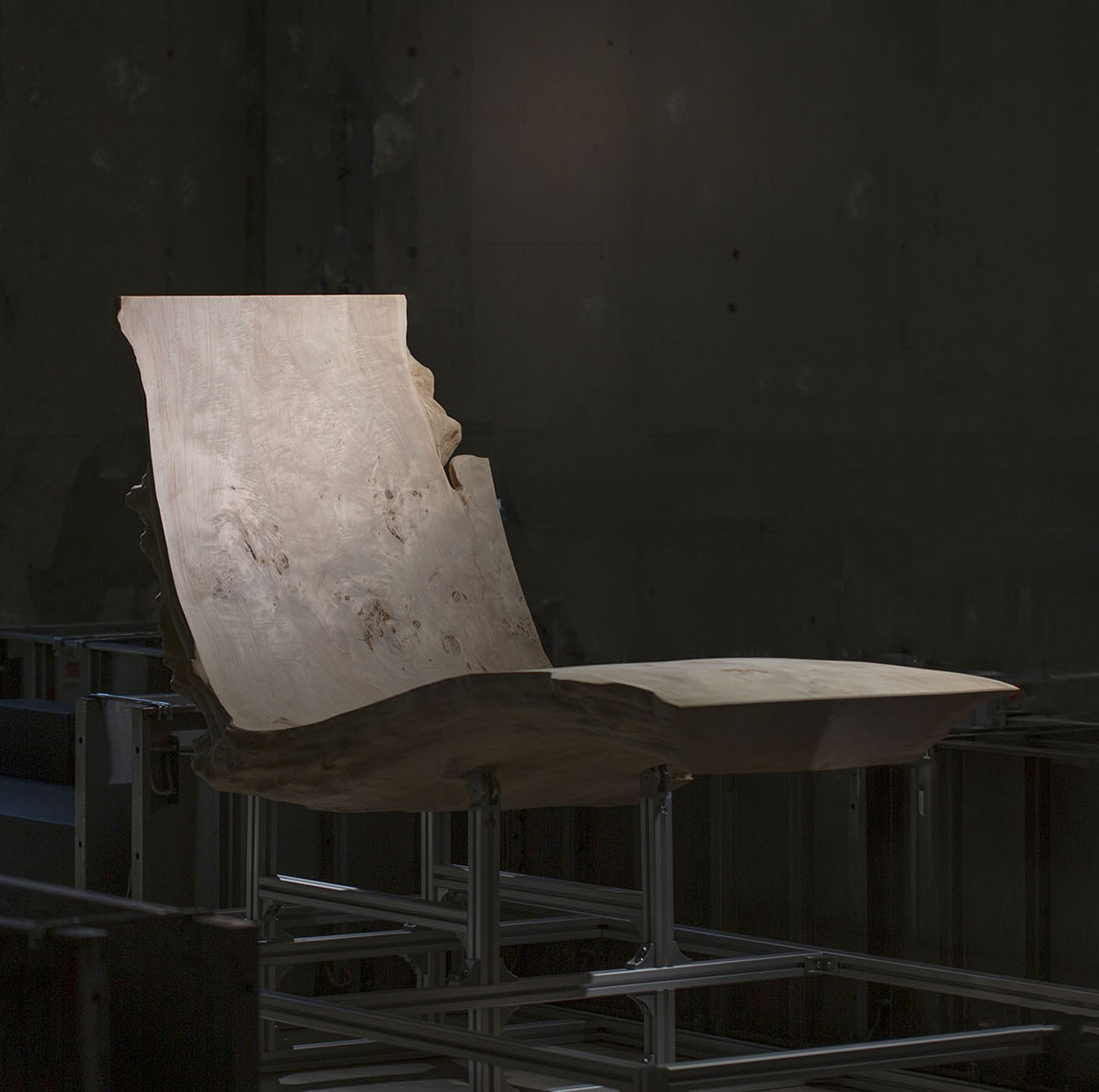


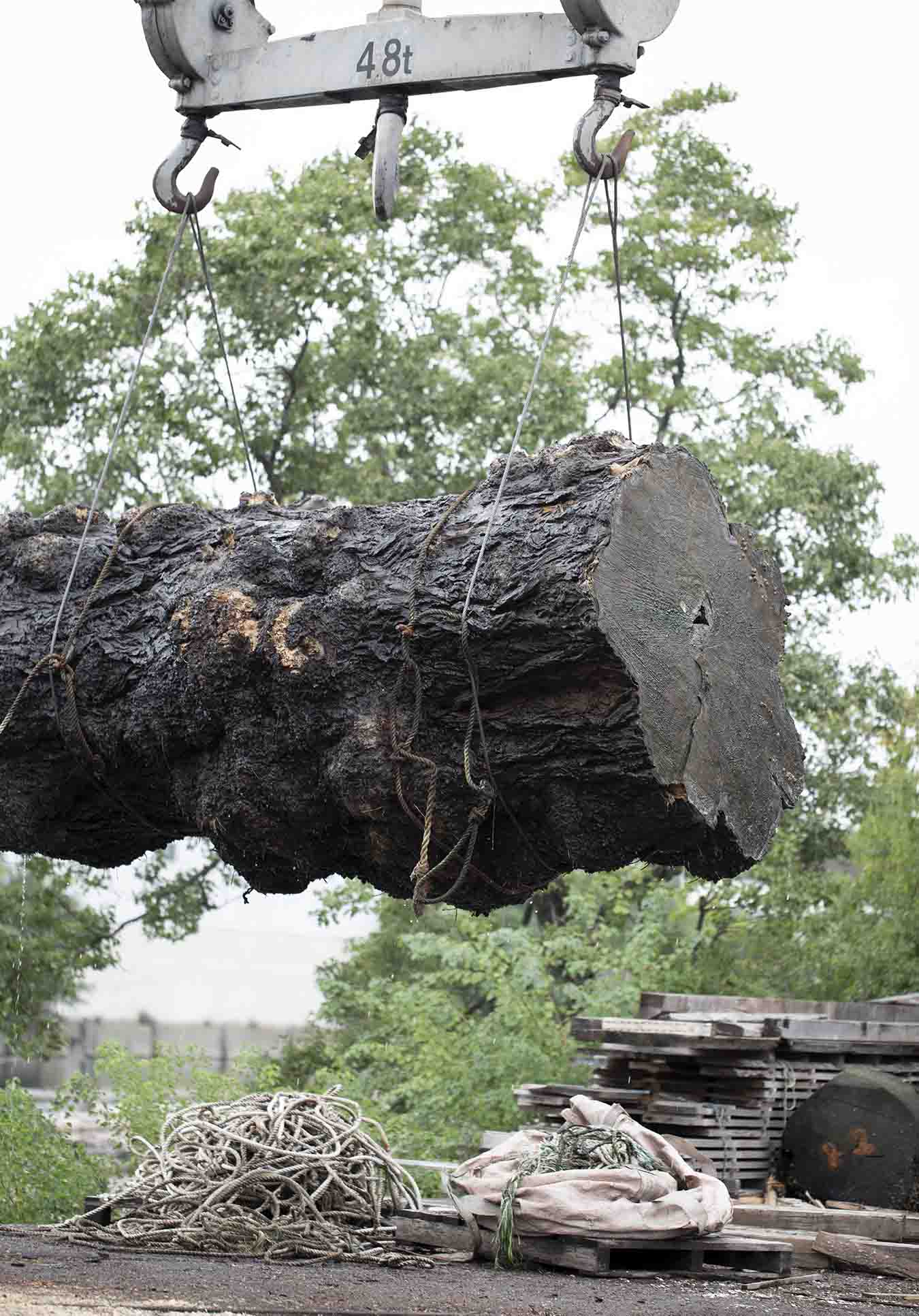
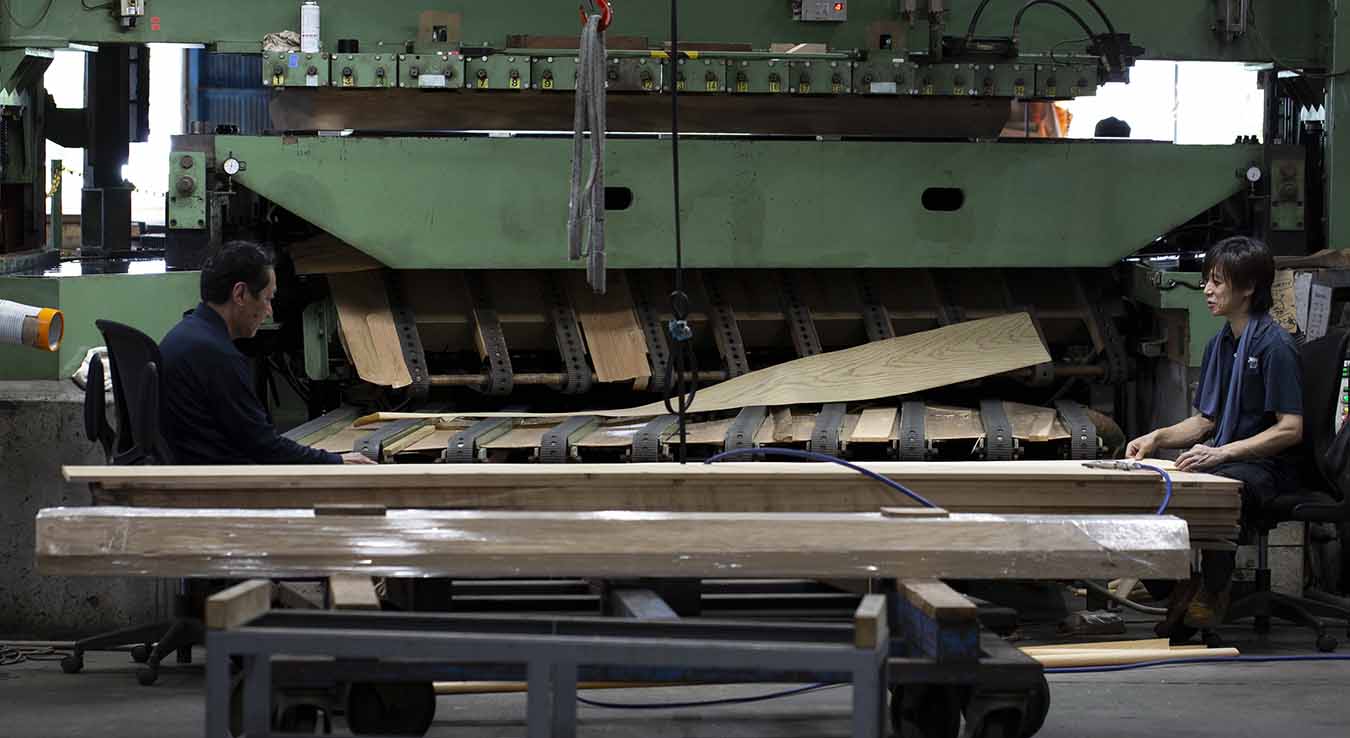
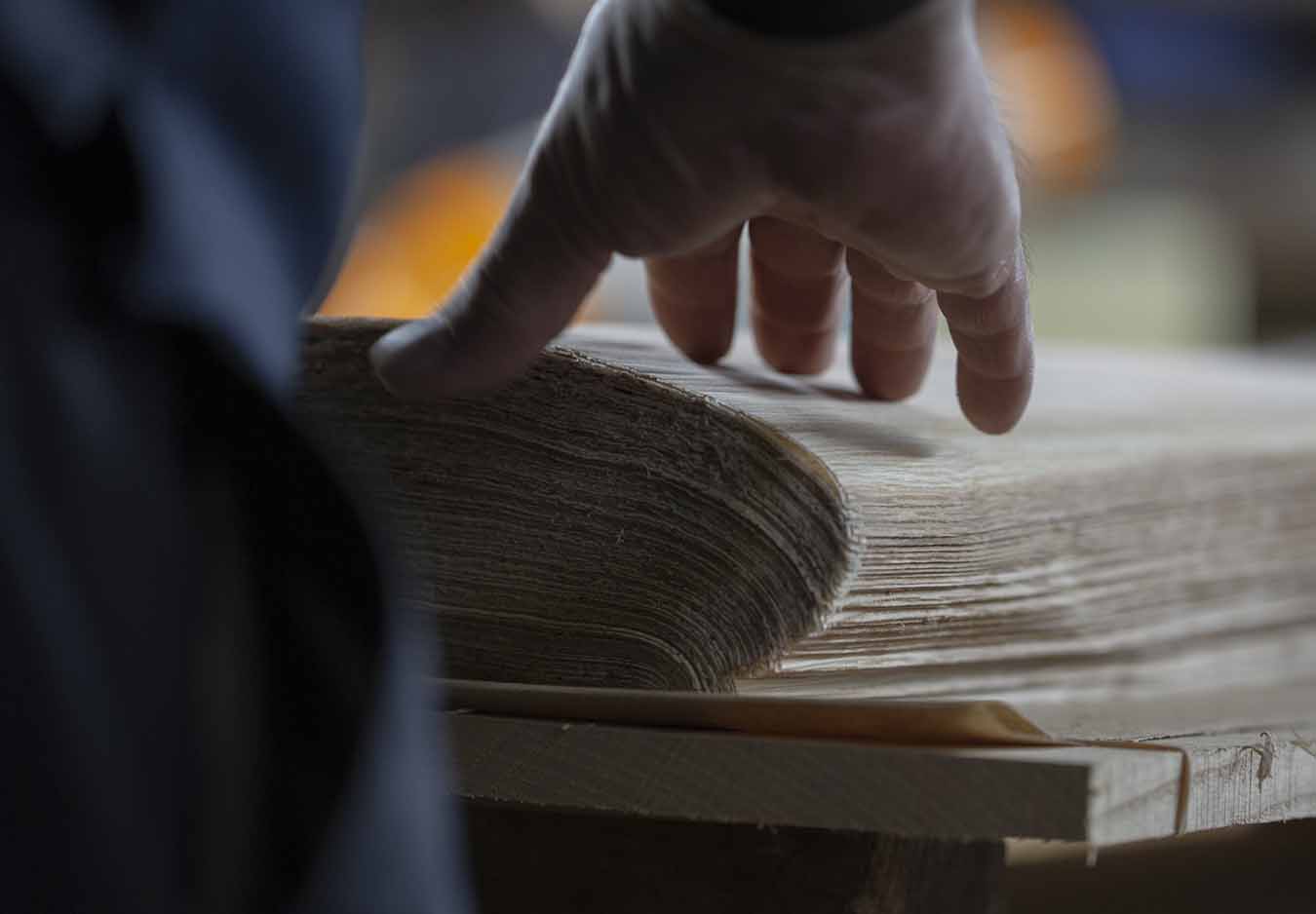
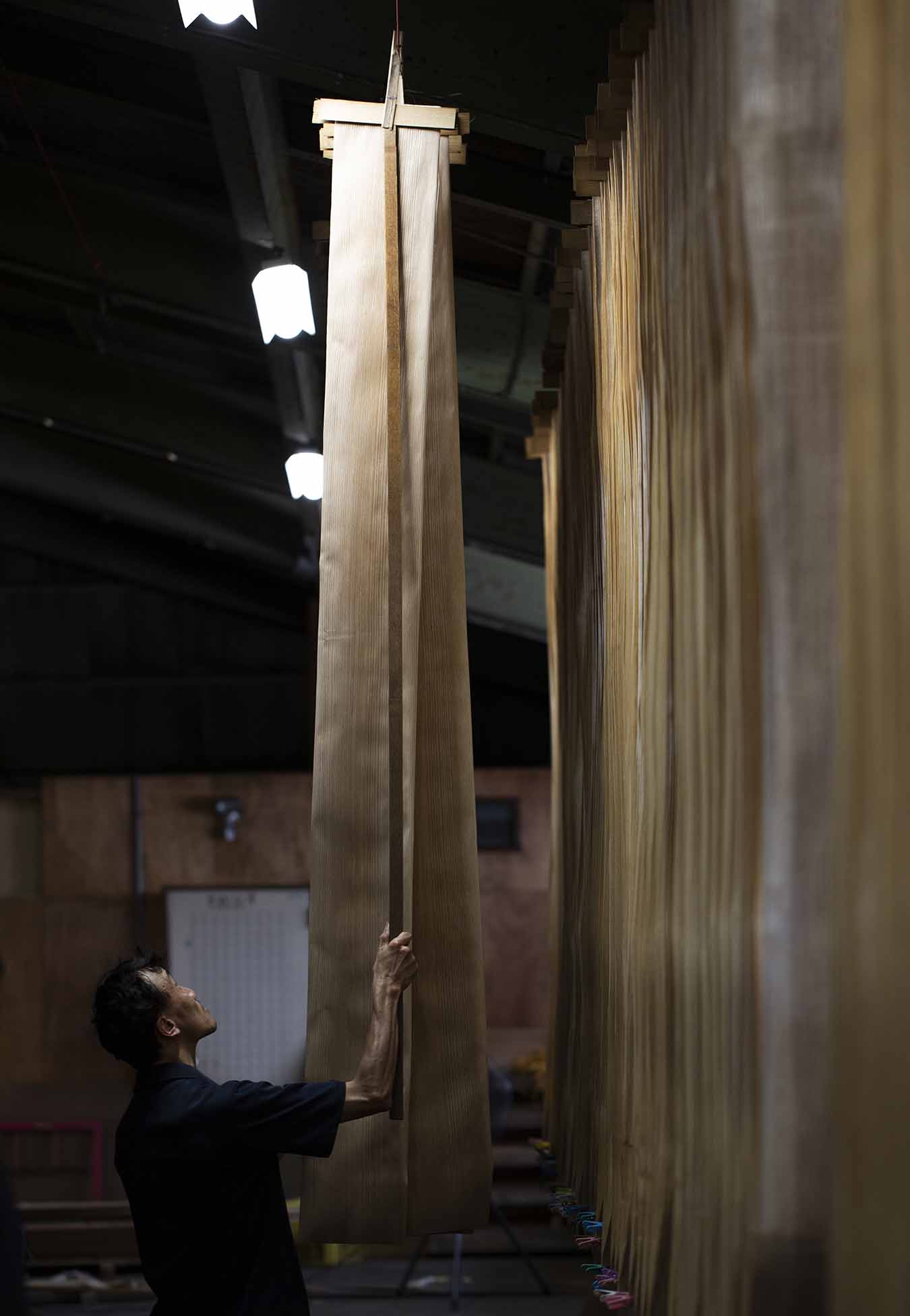
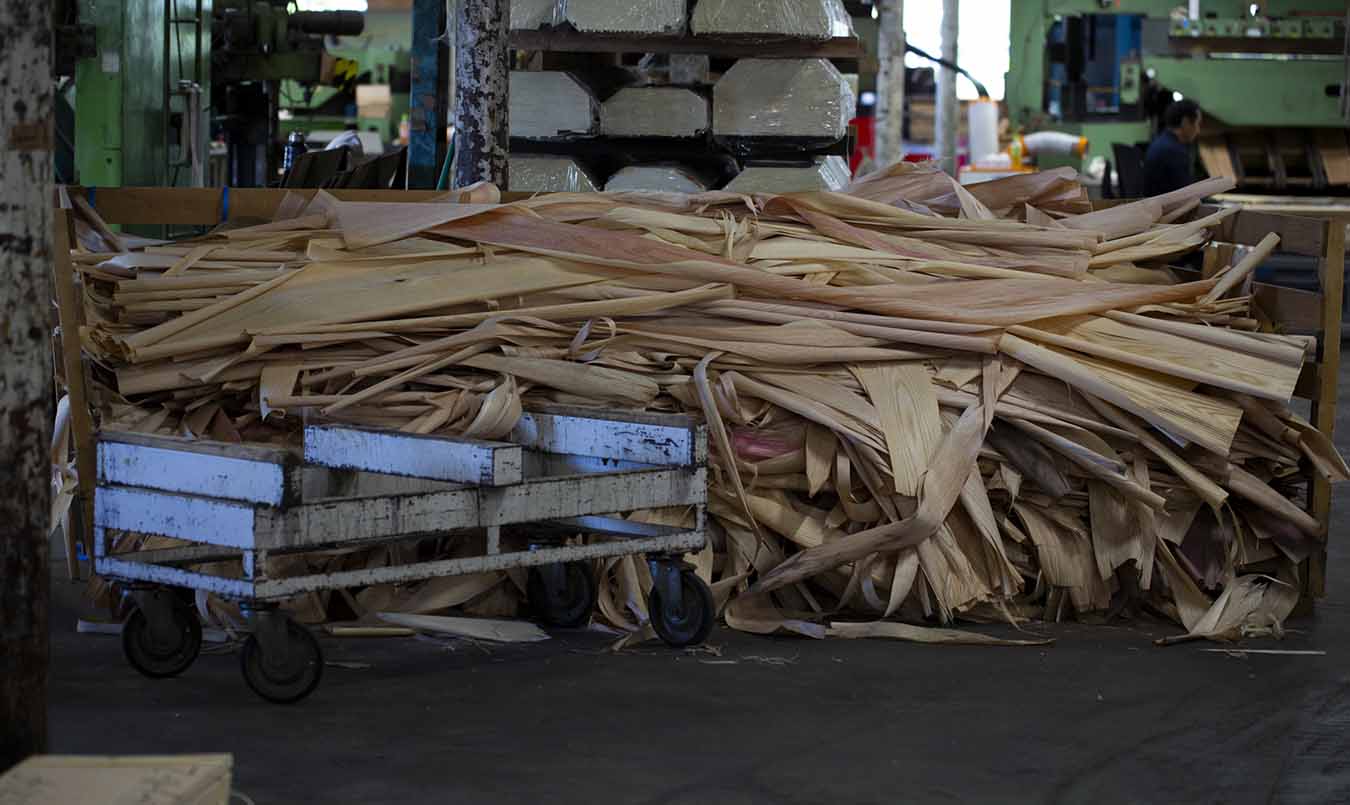
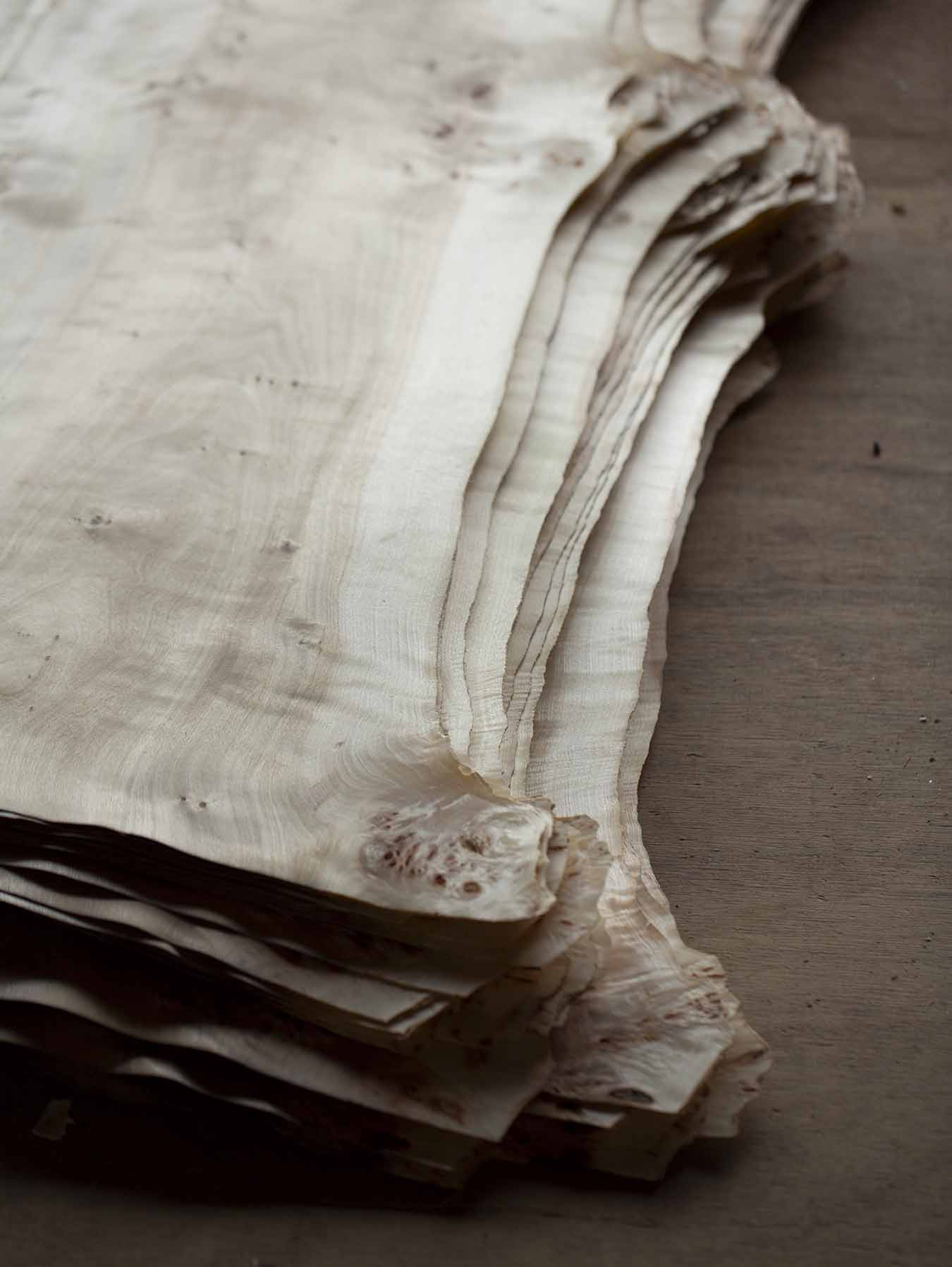
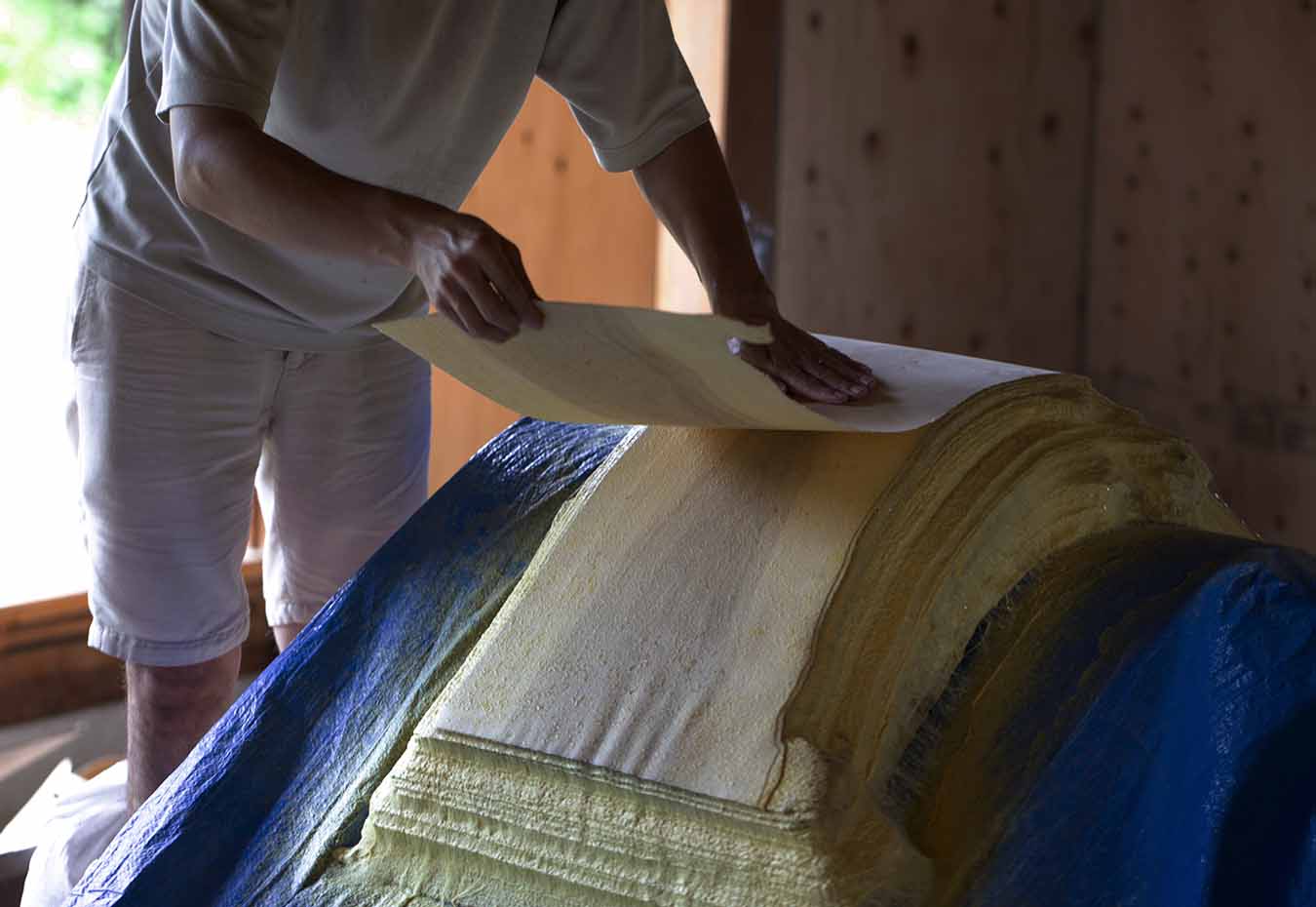
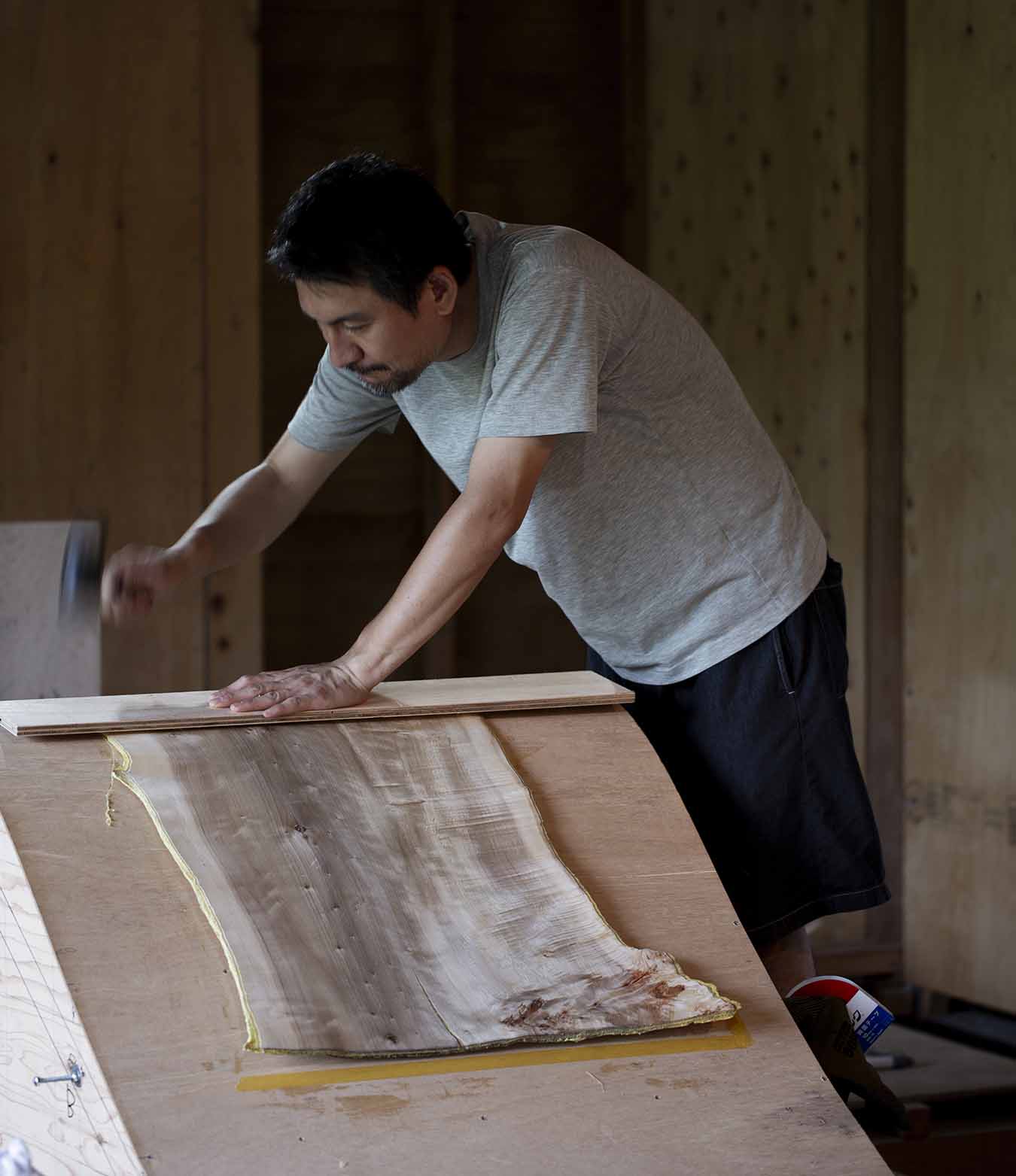
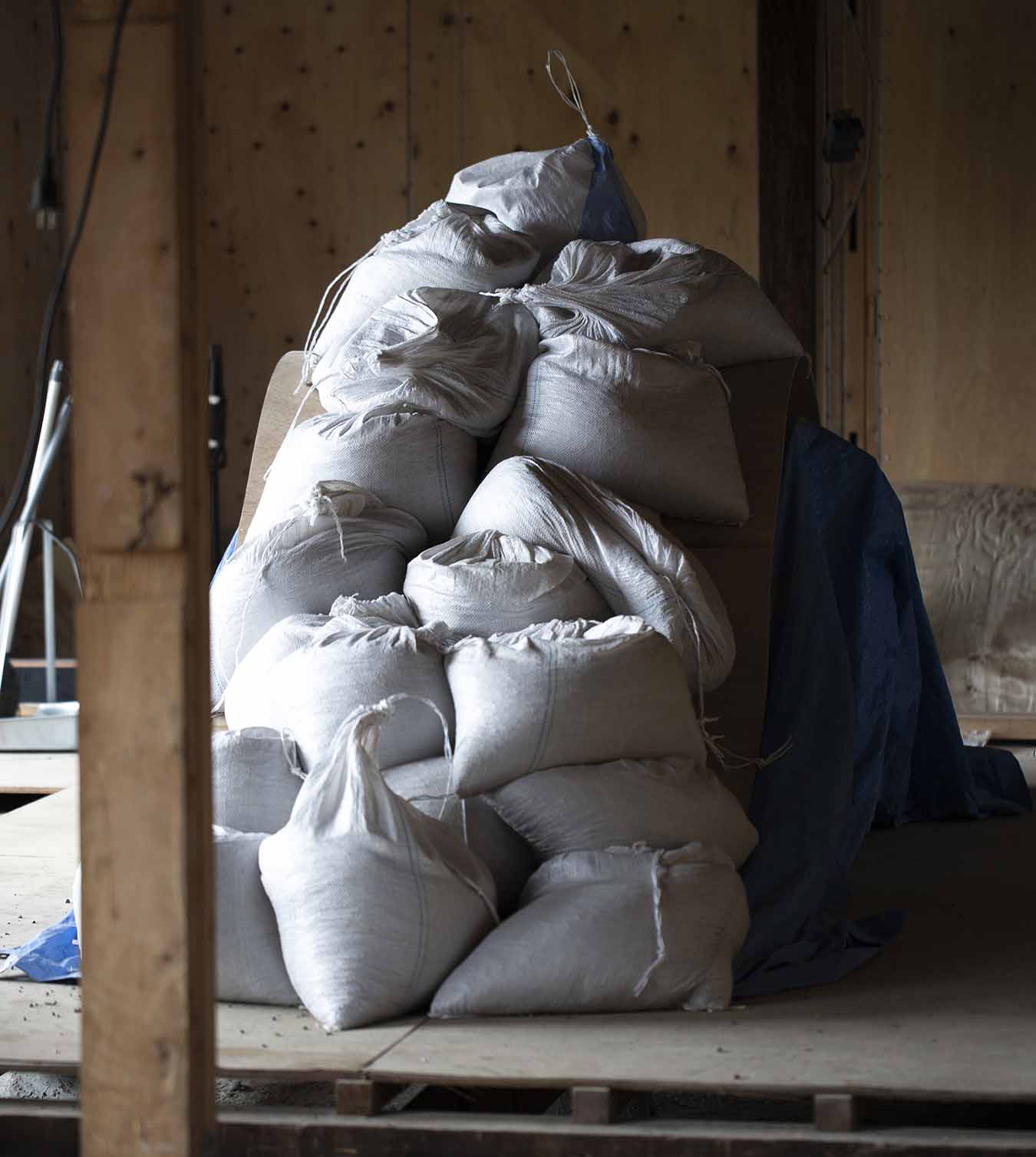
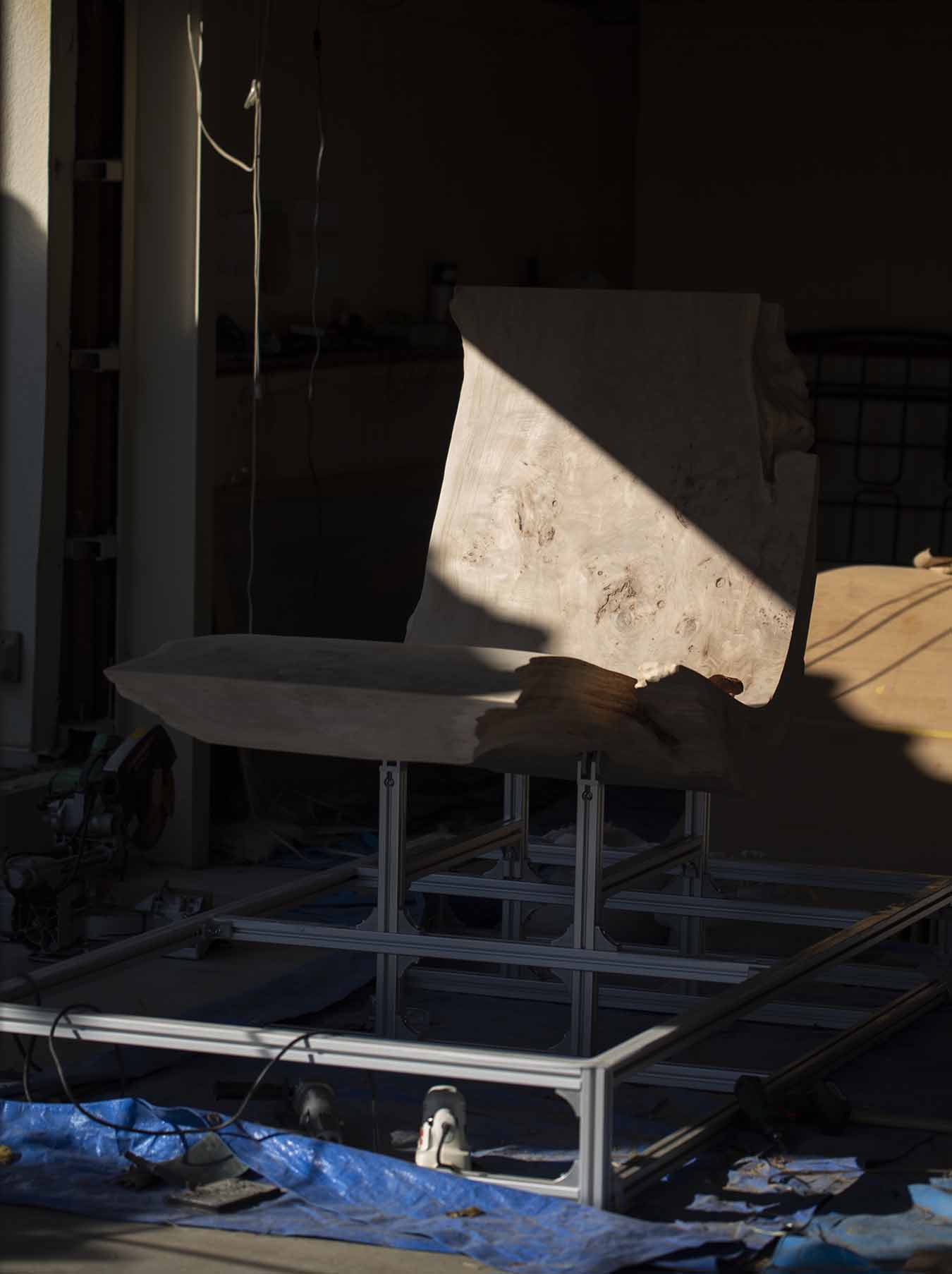
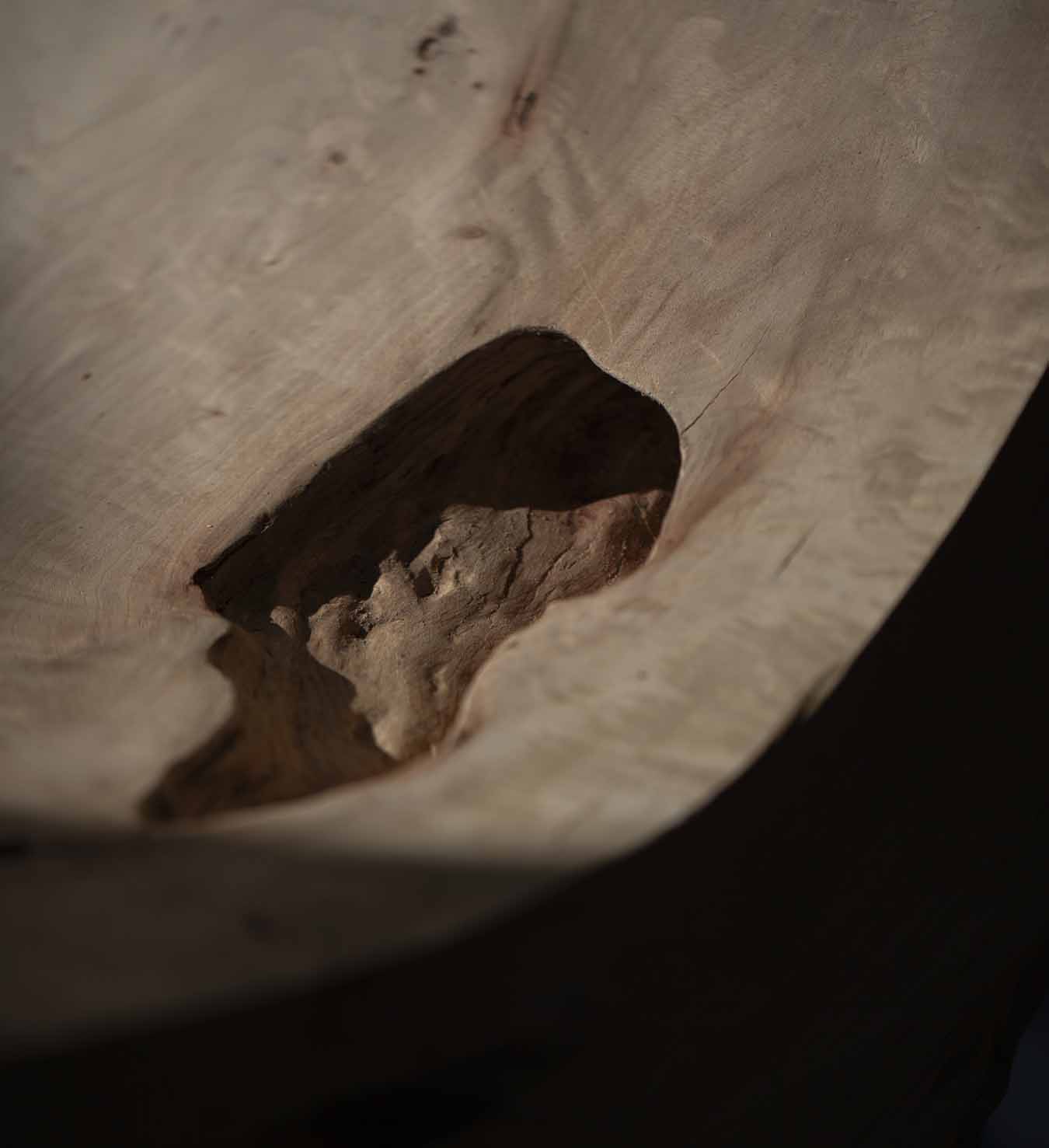
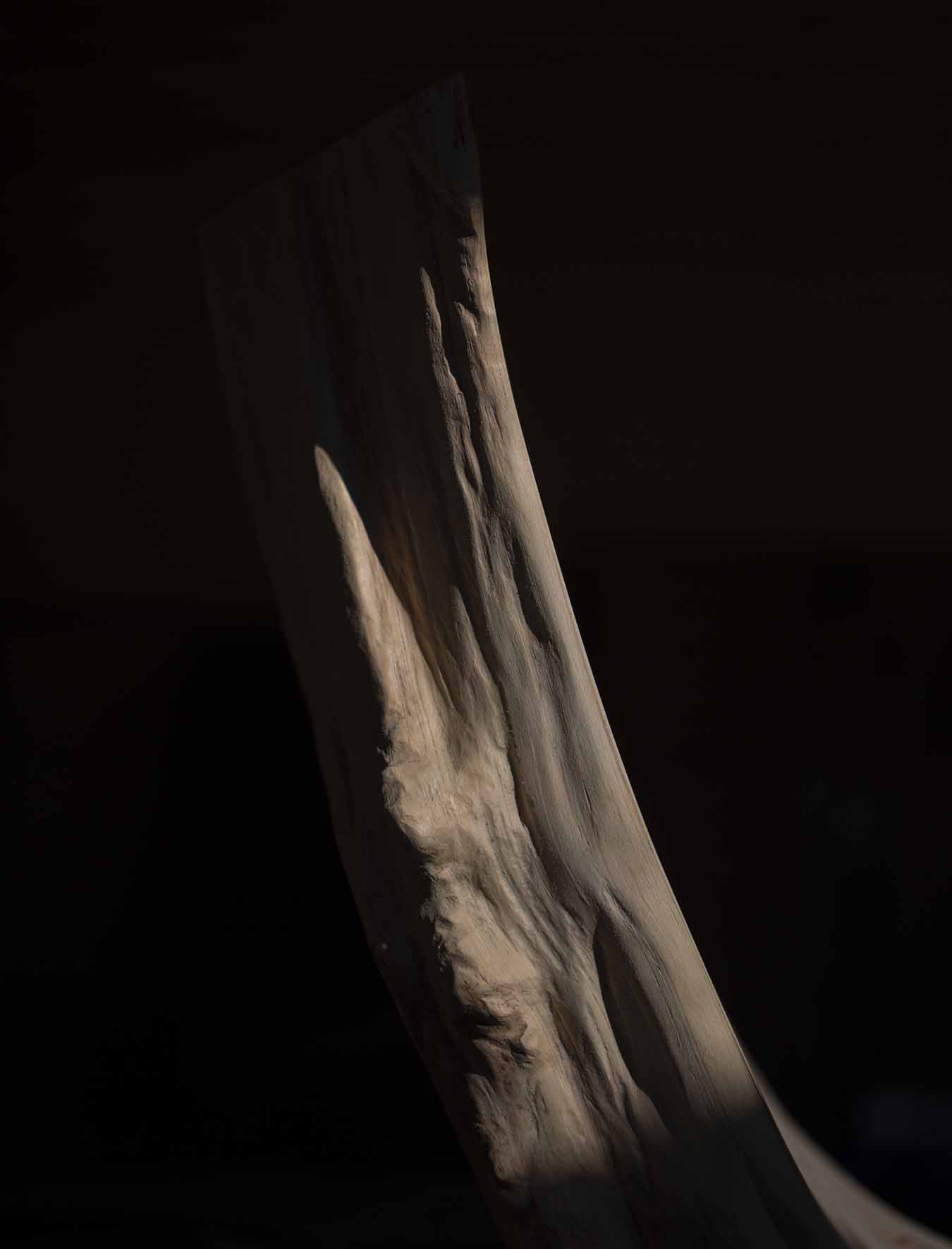
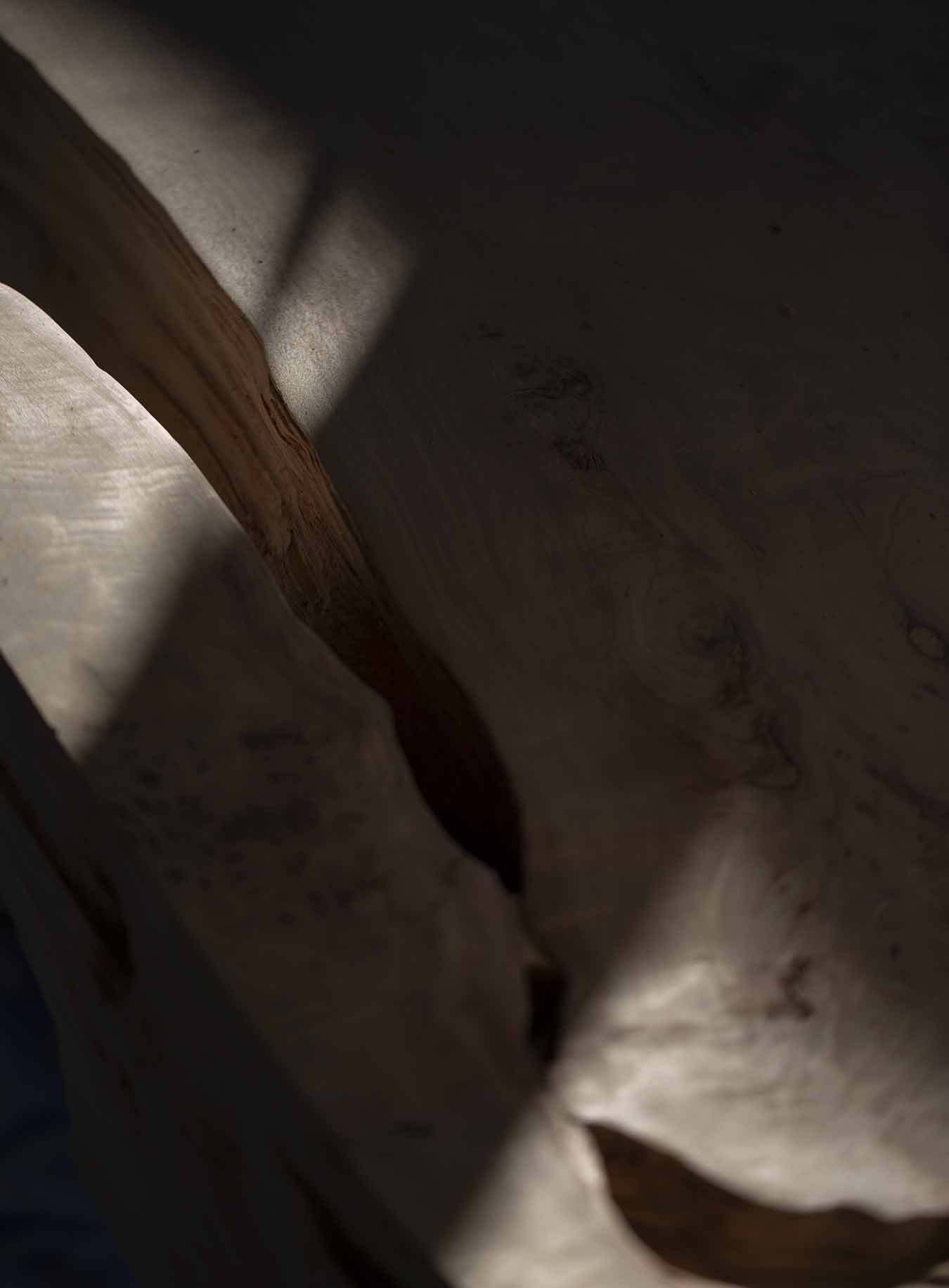
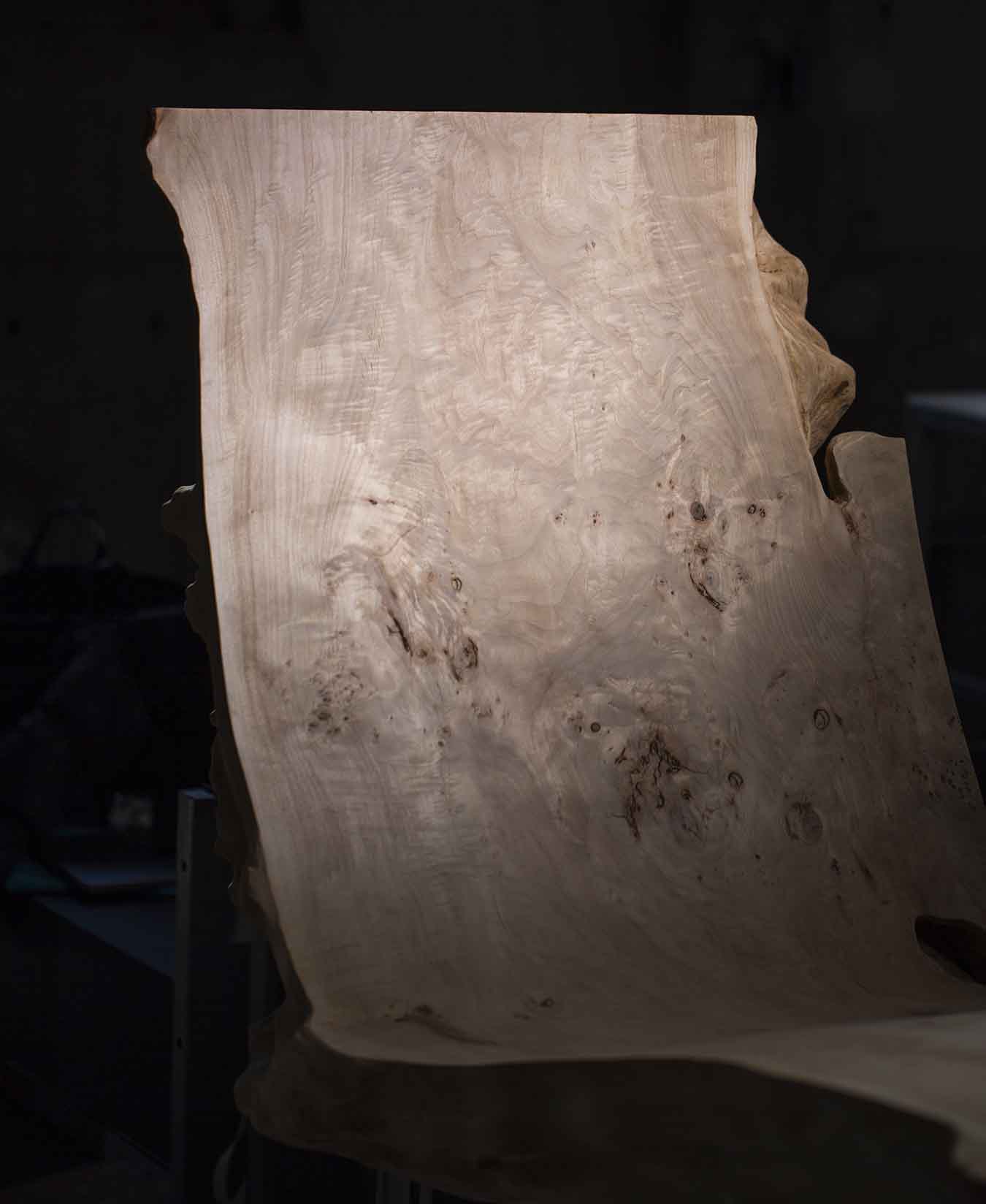
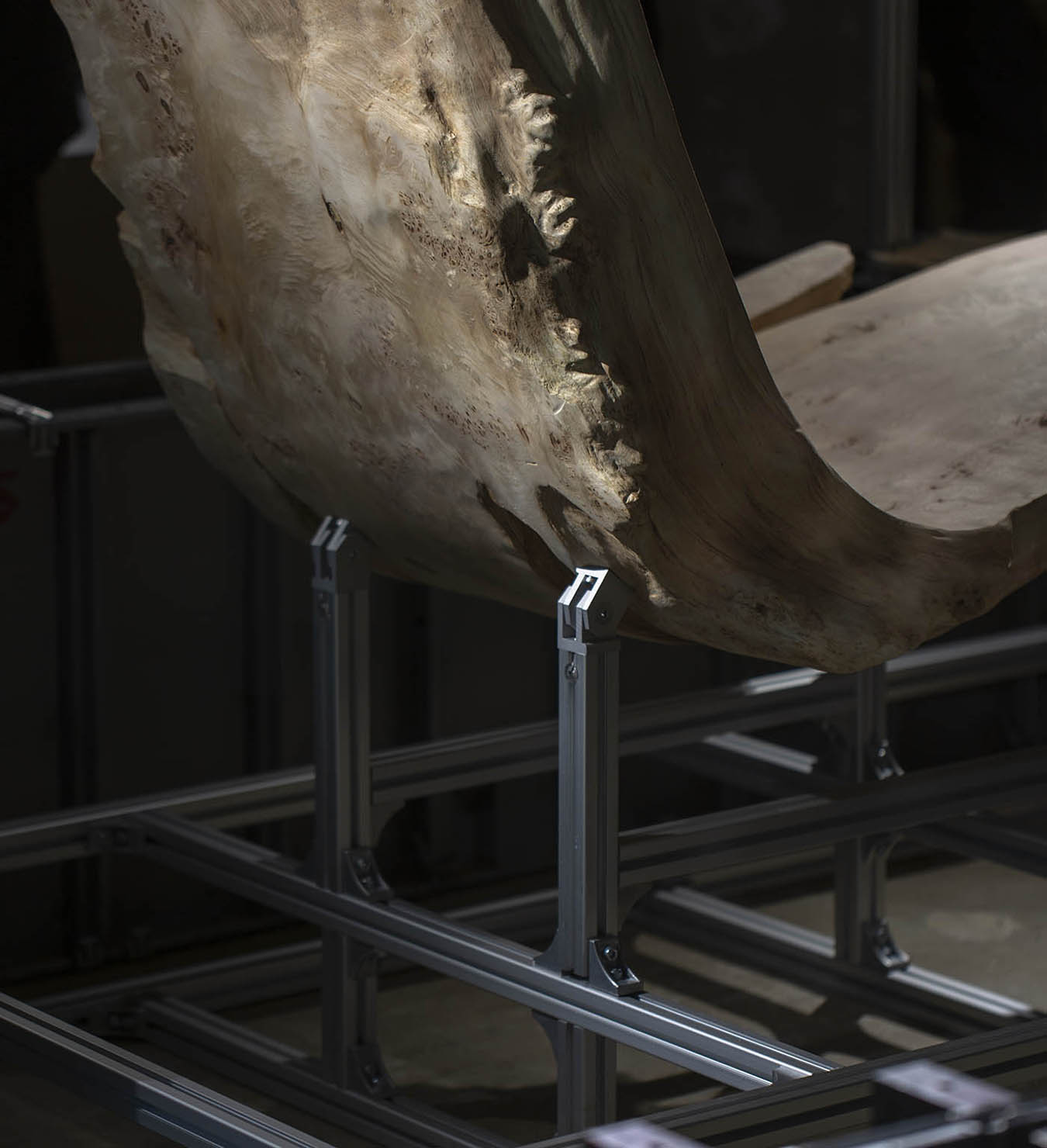
This work originates from a poplar trunk measuring about 1.6 m in diameter,from which a 230 cm block was extracted, sliced into 0.8 mm veneers, and reassembled in order over a mold. By layering 280 irregular contours, it reconstructs solid wood that bends at a calculated angle.
Trees inherently root into the earth and rise toward the sky, evoking power beyond human scale. Milling them into standardized forms allows control, yet erases their spatial and temporal vastness and disconnects us from the larger world they once embodied.
Without passing through this conventional process, the piece retains the tree’s original irregularity while granting it human functionality. It subtly reminds us that the relationship between people and the world—long divided by efficiency and technique—has always been fundamentally continuous.
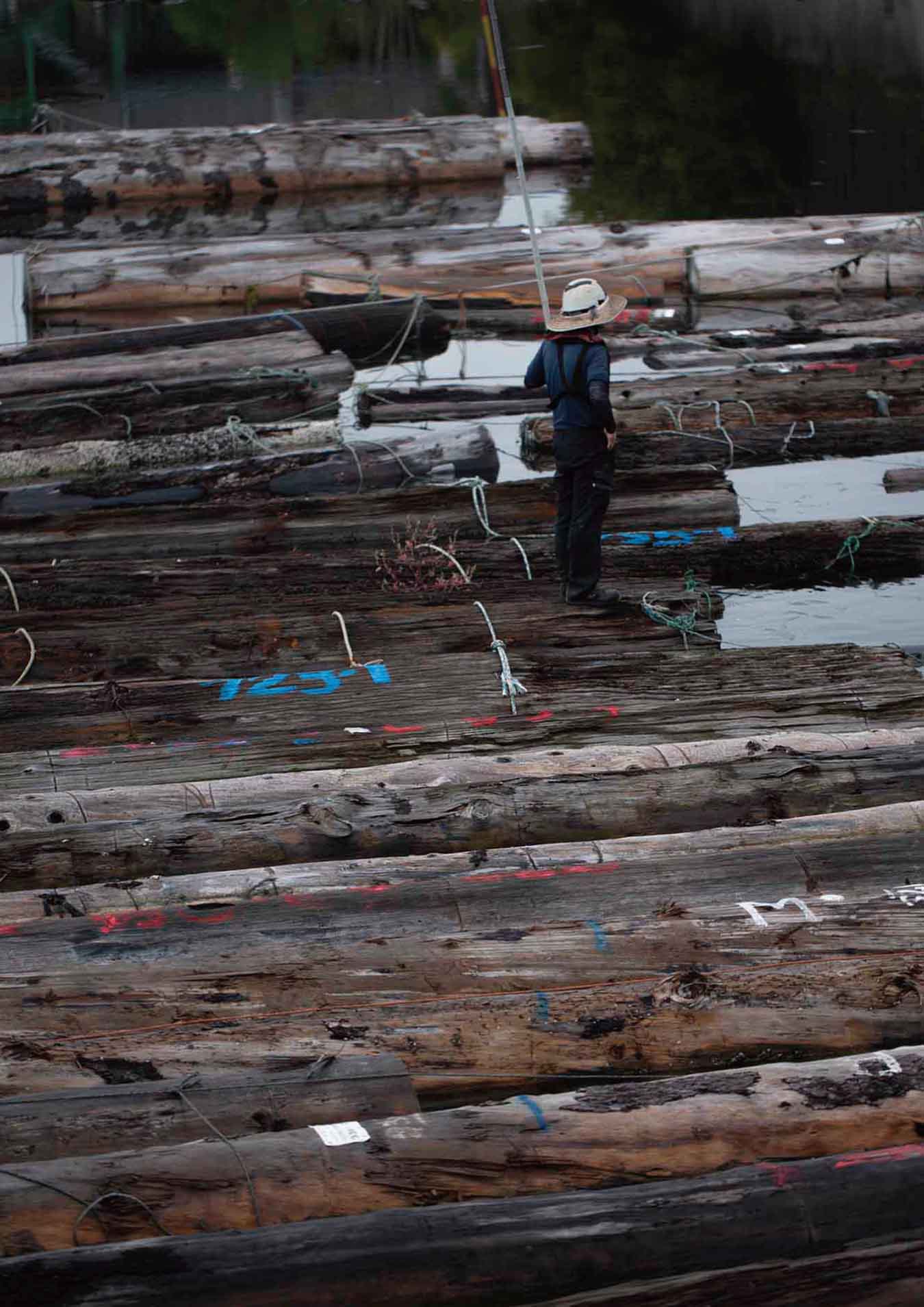
This work was realized in collaboration with MARUKEI WOOD VENEER in Makinohara, Shizuoka, through involvement in processes upstream of conventional woodworking — from the selection of the log itself to sawing and veneer production.
The process of producing veneer while preserving the original contour of the tree is itself an unprecedented and experimental undertaking.
The uniqueness of this work does not reside solely in its final form, but in the methodology behind it. By varying the selection of trees and the geometry of the molds, this approach suggests the potential for a wide range of future developments and expressions.
Trees inherently root into the earth and rise toward the sky, evoking power beyond human scale. Milling them into standardized forms allows control, yet erases their spatial and temporal vastness and disconnects us from the larger world they once embodied.
Without passing through this conventional process, the piece retains the tree’s original irregularity while granting it human functionality. It subtly reminds us that the relationship between people and the world—long divided by efficiency and technique—has always been fundamentally continuous.
This work was realized in collaboration with MARUKEI WOOD VENEER in Makinohara, Shizuoka, through involvement in processes upstream of conventional woodworking — from the selection of the log itself to sawing and veneer production.
The process of producing veneer while preserving the original contour of the tree is itself an unprecedented and experimental undertaking.
The uniqueness of this work does not reside solely in its final form, but in the methodology behind it. By varying the selection of trees and the geometry of the molds, this approach suggests the potential for a wide range of future developments and expressions.
本作品は、直径約1.6mの巨大なポプラの幹から長さ230㎝・厚さ23 ㎝の木塊を切り出し、それを0.8㎜の突板へとスライスした後、型の上で元の順に積層し直し接着したもの。280枚のいびつな輪郭を重ね、計画された角度に湾曲した無垢材を再構成した。
樹木とは本来、大地に根を張り、空にそびえる存在であり、その姿は人智を超えた強大な力は畏敬の念を呼び起こす。一方、樹木を水平・垂直に整える「製材」という知恵は、その圧倒的な自然のスケールを手の中へと取り込み、コントロール可能な状態へと変えるプロセスである。しかしその過程で、樹木が本来もっていた空間的・時間的な広がりは失われ、素材からは大地や空、壮大な世界とのつながりは感じ取れなくなる。
本作では、そうした“整える(=製材)”プロセスを介することなく、森の中に立つ樹木の痕跡を残したまま、人のための機能を与えることを試みた。樹木本来のいびつさと、プロダクトとしての機能を同時に立ち上げることで、効率や知恵や関与によって分断されてきた「人と世界」との関係が、本来は地続きであることを再認識する。
本作は、静岡県牧之原市で突板の製造を行う、有限会社マルケイとの協働によって制作している。一般的な木工工程よりさらに上流にあたる、原木の選定~製材~突板製造に至る工程にアプローチすることで実現した。樹木本来の輪郭を保ったまま突板を製造する工程そのものが、前例のない実験的な試みであり加工上のリスクを伴い、本作の独自性はこのプロセスそのものにある。樹種の選択や型の形状を変化させることで、この手法は今後さらに多様な表現や展開へと発展していく可能性を示している。
樹木とは本来、大地に根を張り、空にそびえる存在であり、その姿は人智を超えた強大な力は畏敬の念を呼び起こす。一方、樹木を水平・垂直に整える「製材」という知恵は、その圧倒的な自然のスケールを手の中へと取り込み、コントロール可能な状態へと変えるプロセスである。しかしその過程で、樹木が本来もっていた空間的・時間的な広がりは失われ、素材からは大地や空、壮大な世界とのつながりは感じ取れなくなる。
本作では、そうした“整える(=製材)”プロセスを介することなく、森の中に立つ樹木の痕跡を残したまま、人のための機能を与えることを試みた。樹木本来のいびつさと、プロダクトとしての機能を同時に立ち上げることで、効率や知恵や関与によって分断されてきた「人と世界」との関係が、本来は地続きであることを再認識する。
本作は、静岡県牧之原市で突板の製造を行う、有限会社マルケイとの協働によって制作している。一般的な木工工程よりさらに上流にあたる、原木の選定~製材~突板製造に至る工程にアプローチすることで実現した。樹木本来の輪郭を保ったまま突板を製造する工程そのものが、前例のない実験的な試みであり加工上のリスクを伴い、本作の独自性はこのプロセスそのものにある。樹種の選択や型の形状を変化させることで、この手法は今後さらに多様な表現や展開へと発展していく可能性を示している。




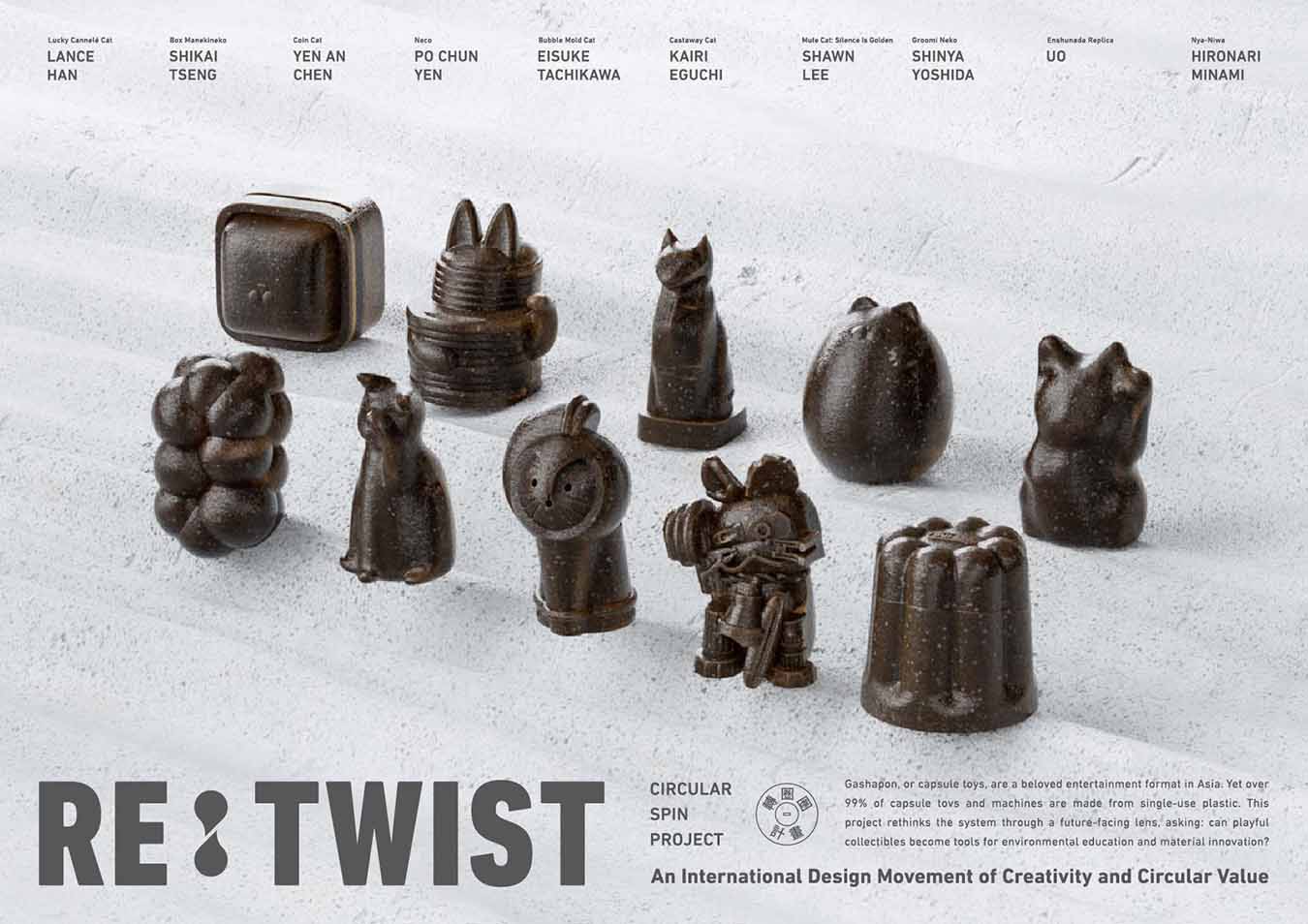
With the aim of promoting exchange between Taiwanese and Japanese designers and raising awareness about the reuse of marine waste, ten designers from Taiwan and Japan designed capsule toys in the shape of maneki-neko (beckoning cats) using plastic from marine waste.
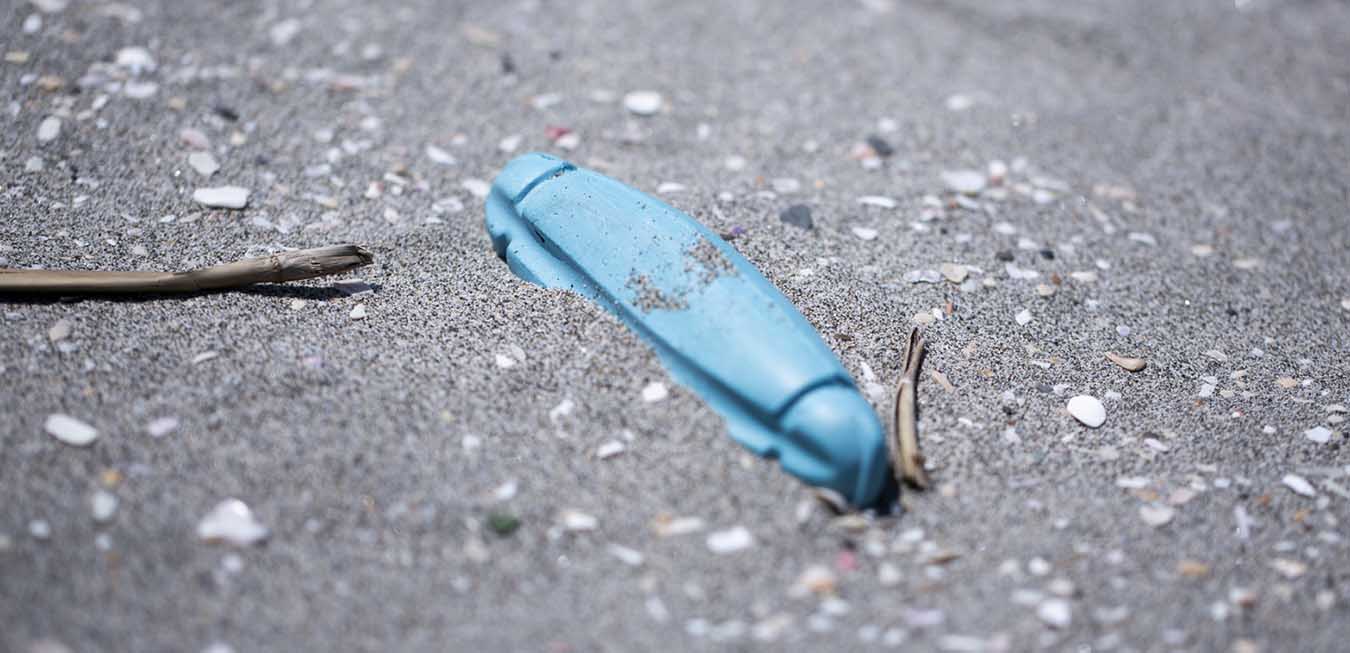
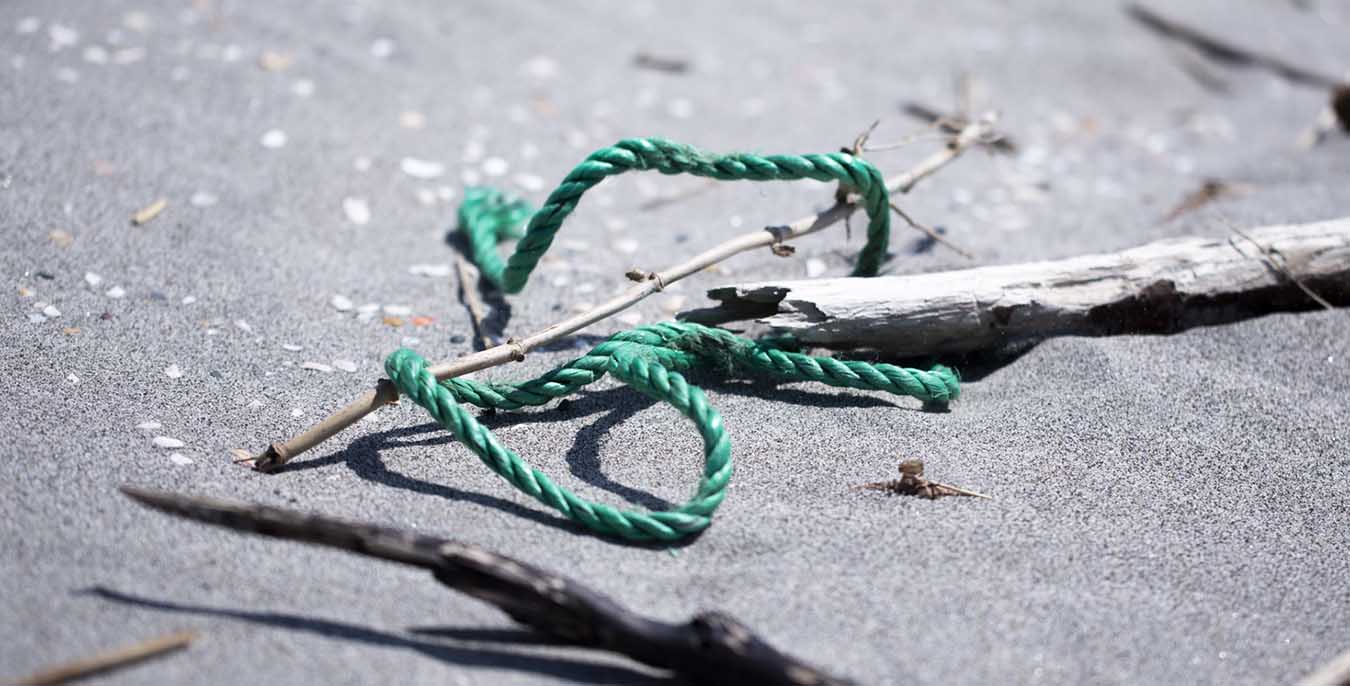
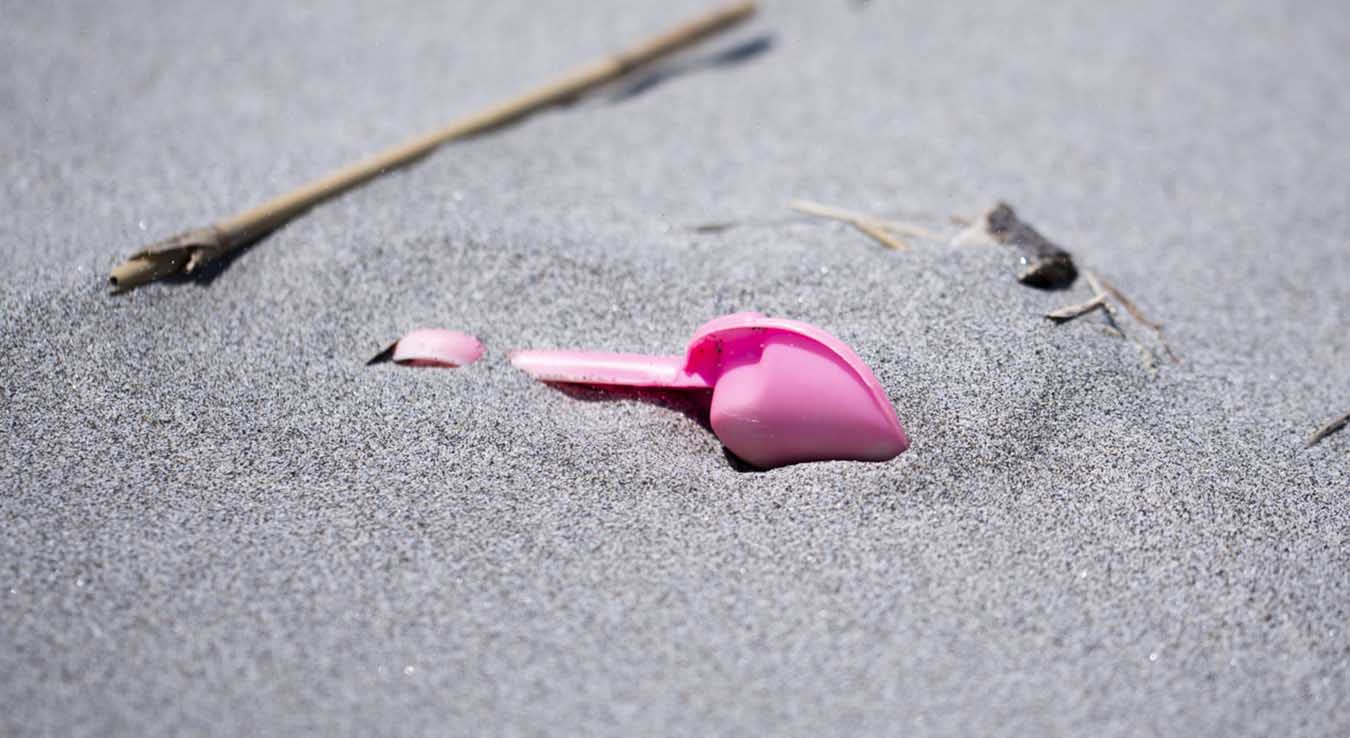
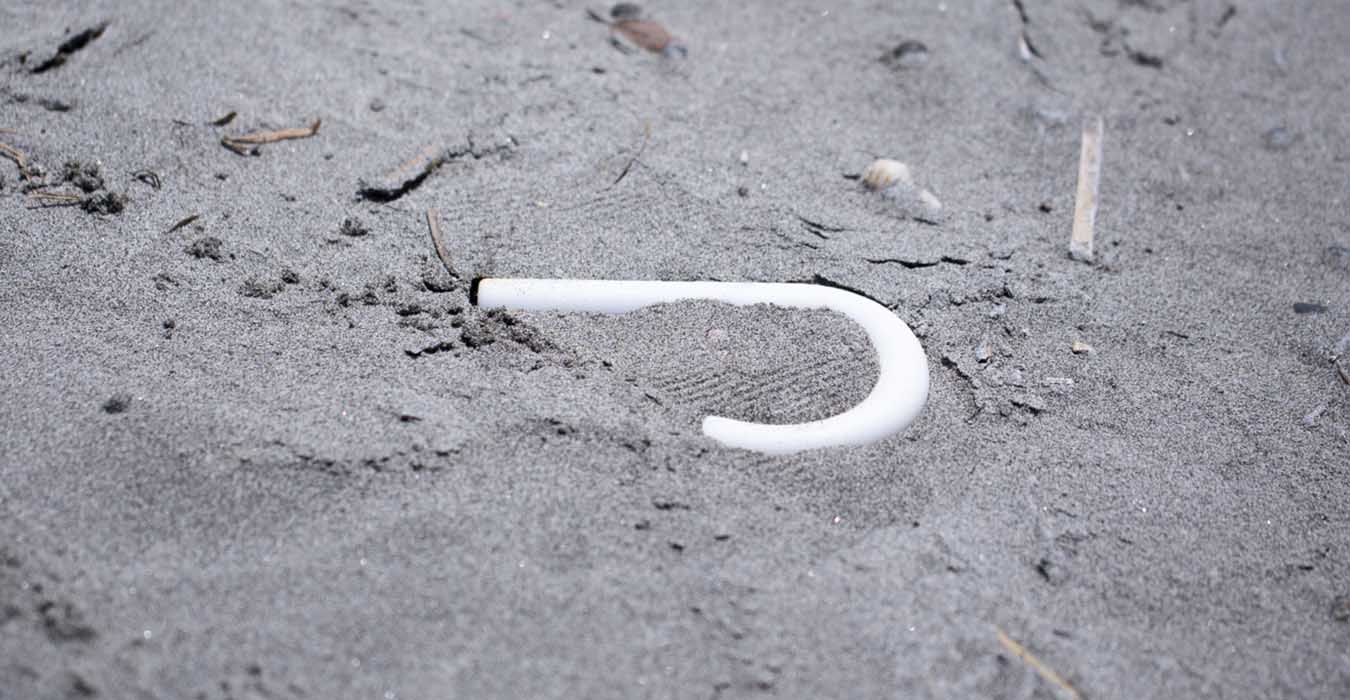
When we heard that the material used for this project was “marine plastic,” we realized that although we knew the term, we had no concrete understanding of what it actually looked like. What shape does it take? How heavy is it? What does it feel like? What does it smell like? How much of it exists, and where? We had no real sense of these things. We considered this to be one of the issues with sustainable materials. Recycled materials are collected, processed, and distributed far from the lives of individual consumers, and ultimately reach our hands, but the connection between this process and our lives feels fragmented and lacking in reality. What is needed is a sense of connection between marine plastic as a material and our daily lives, even if mediated by something else. And that sense of connection can only be found in the real ocean.
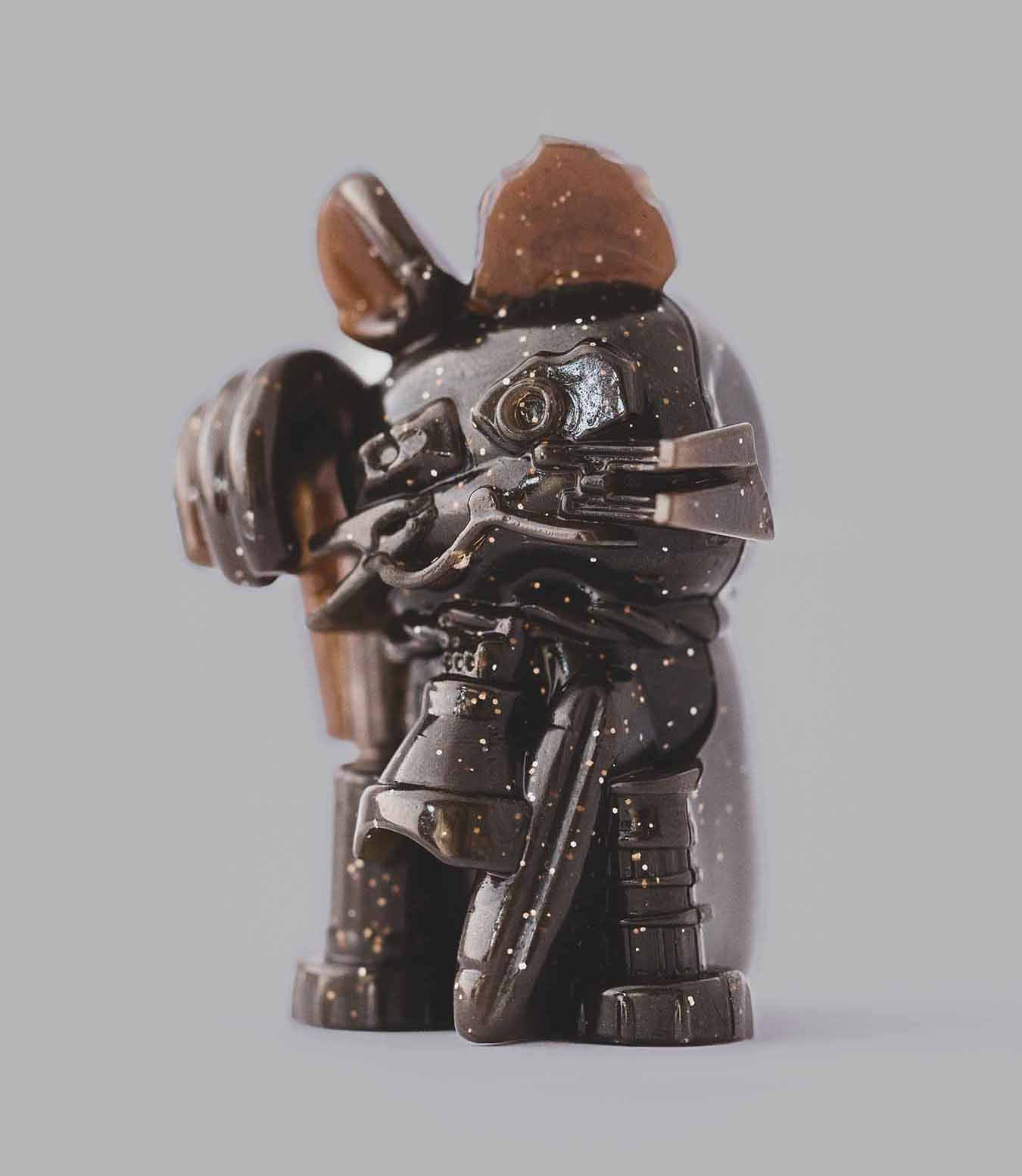
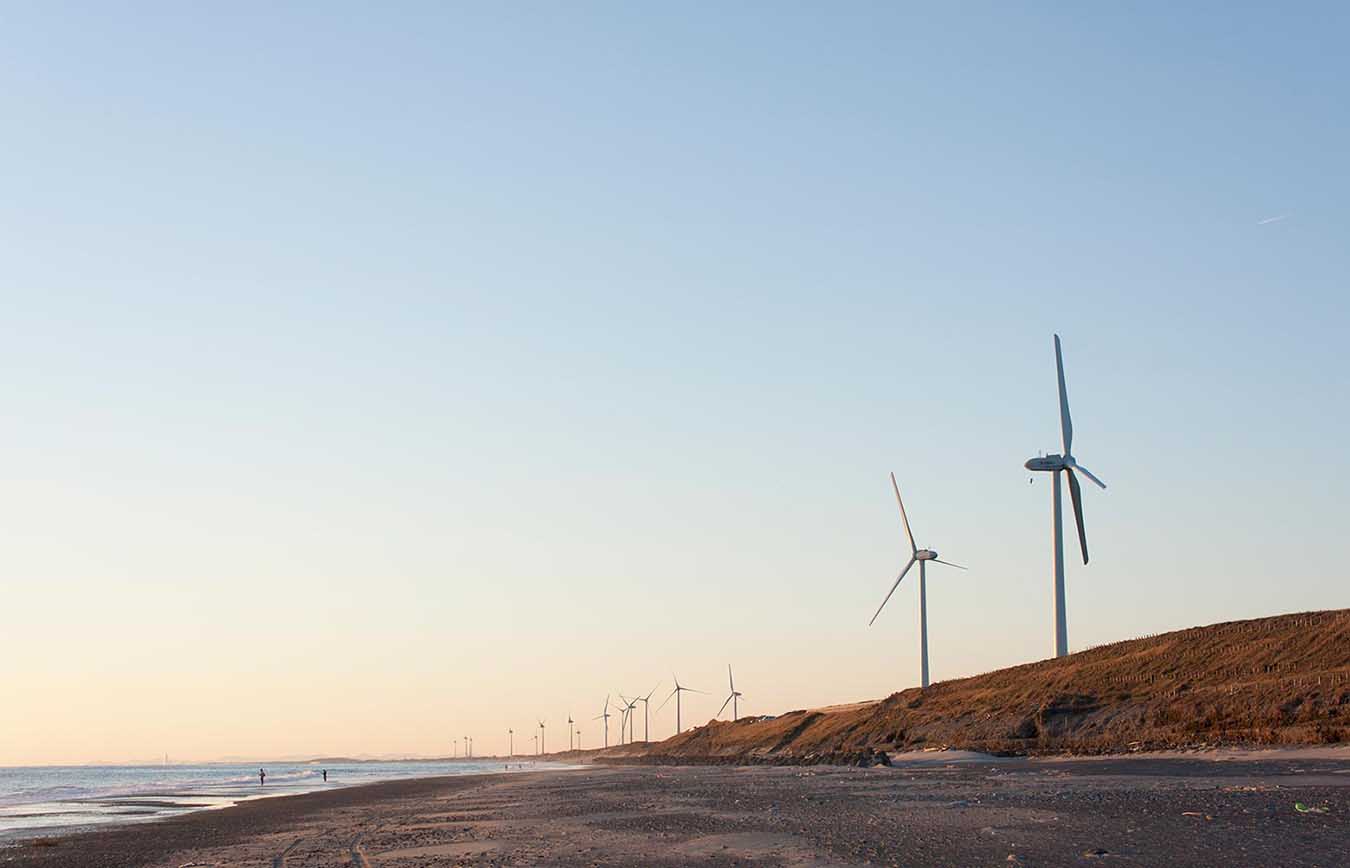
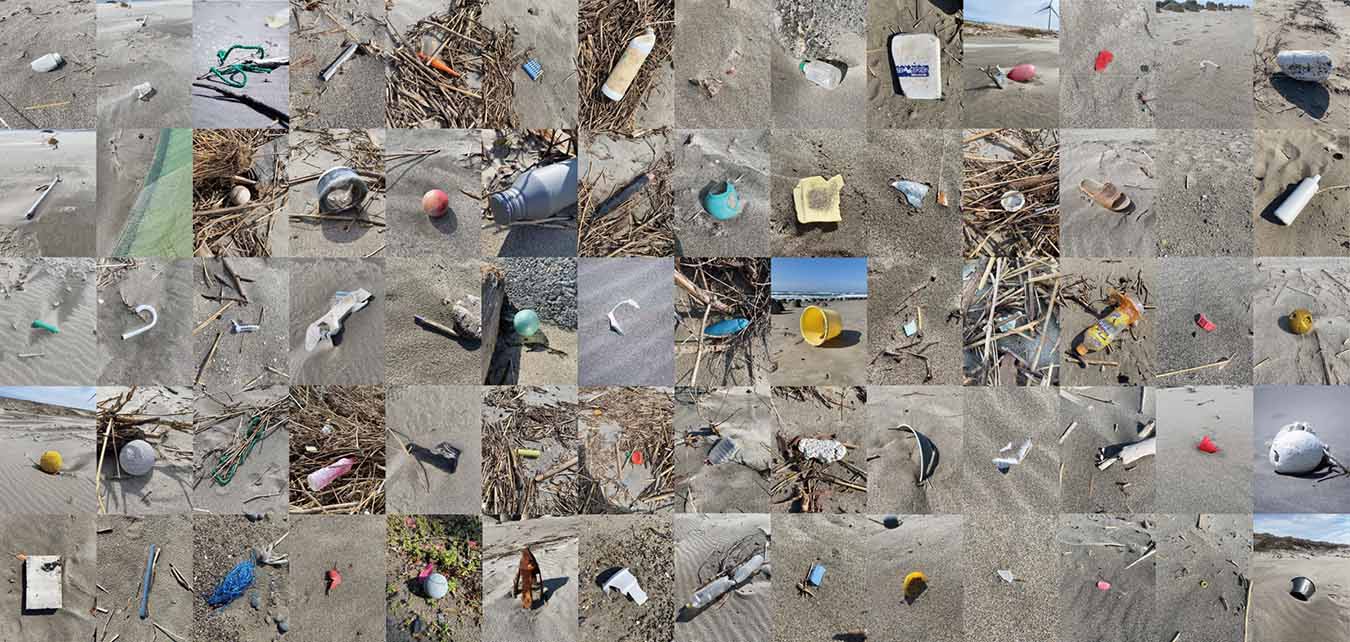
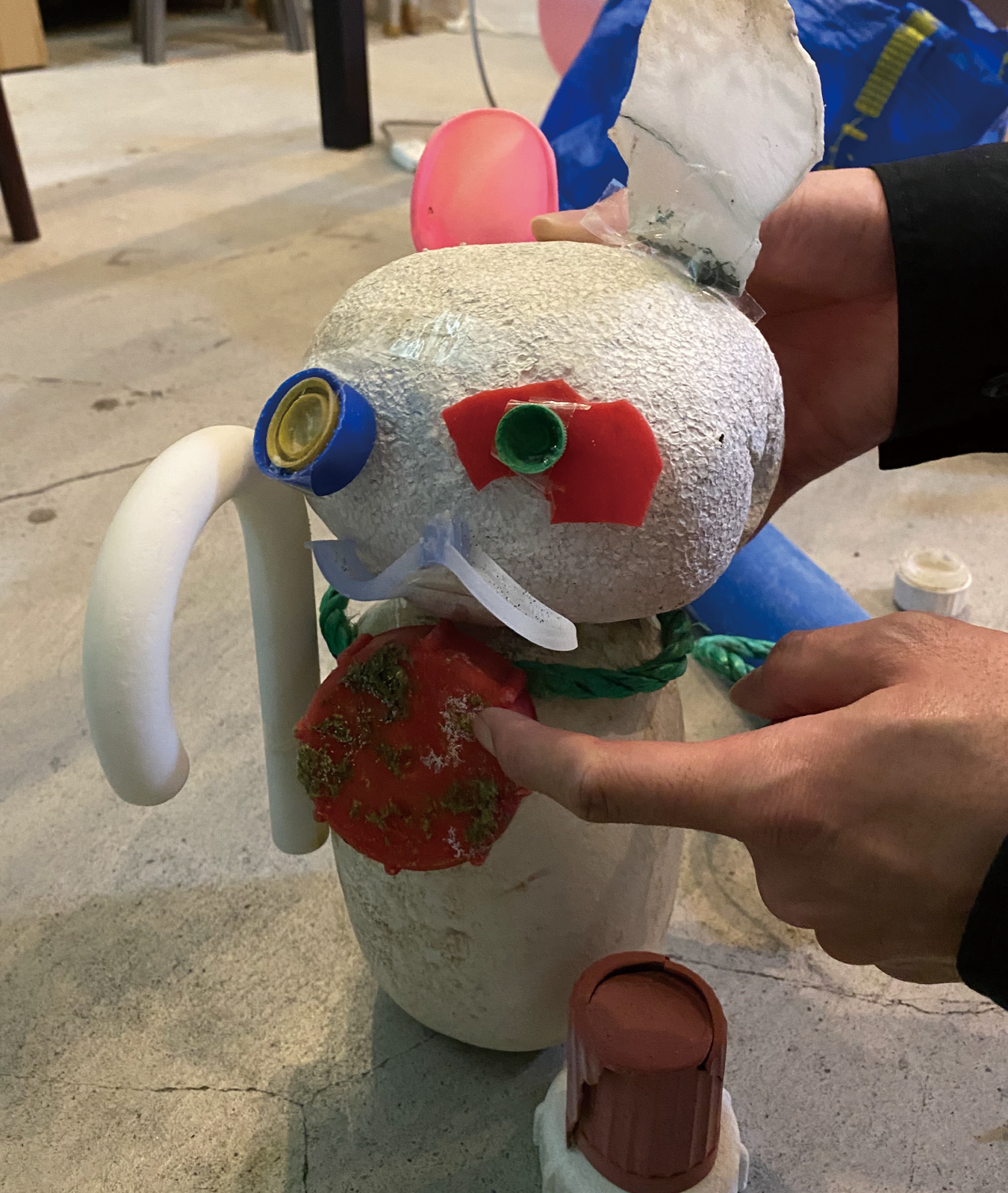
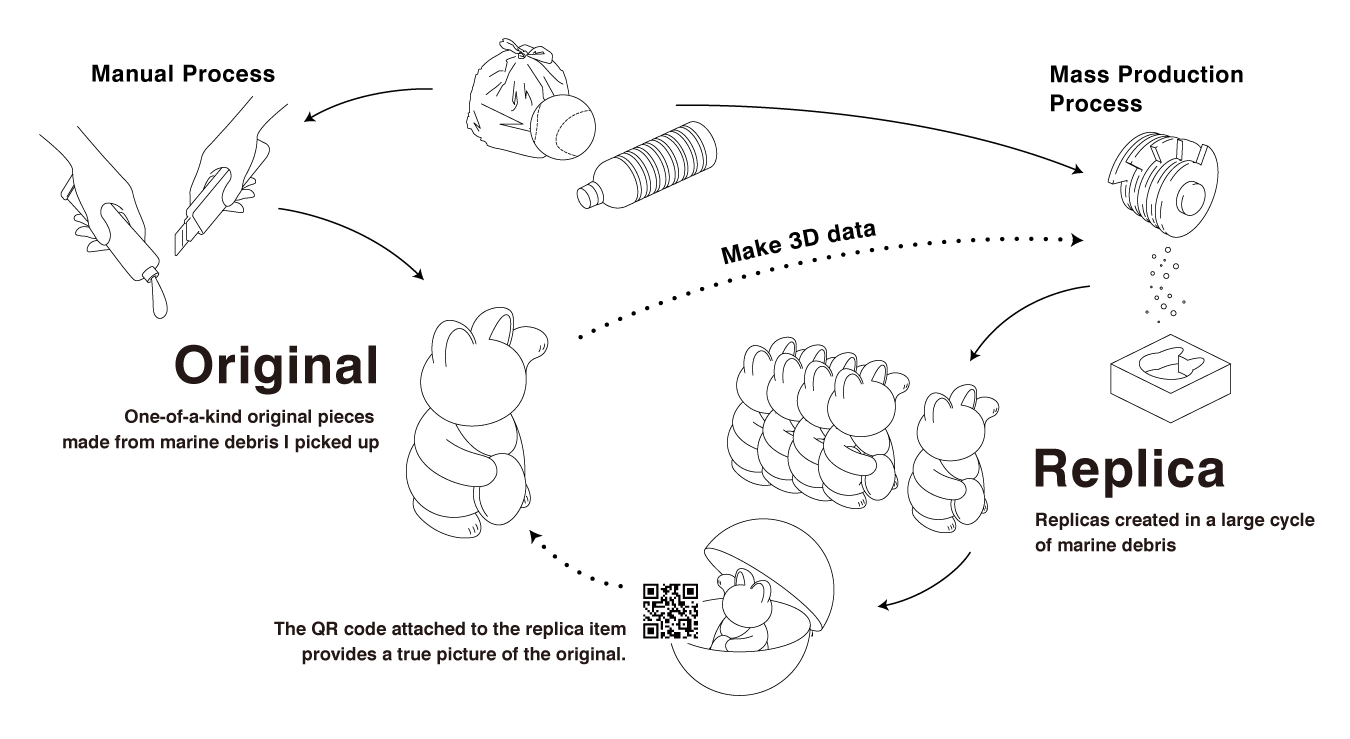
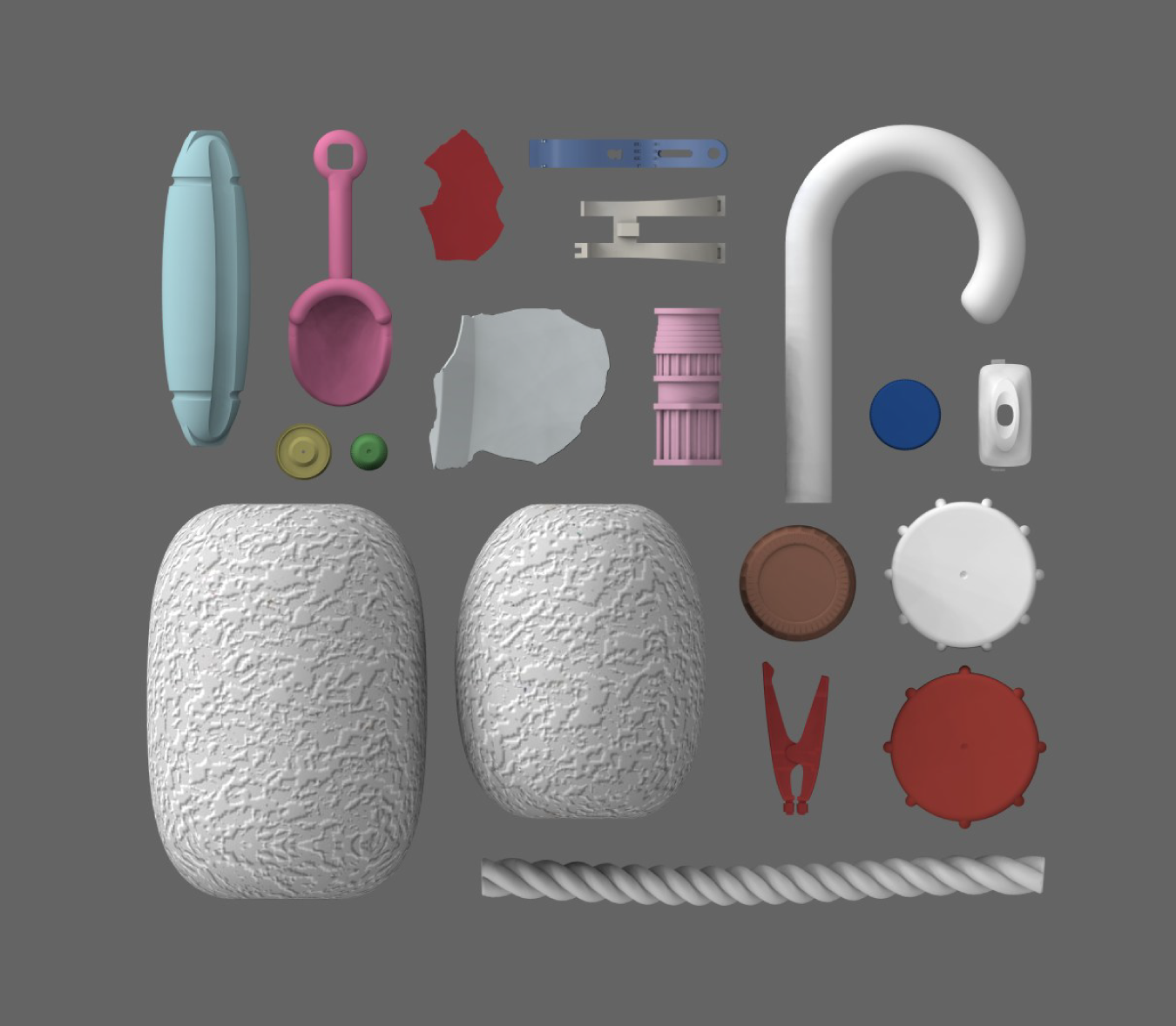
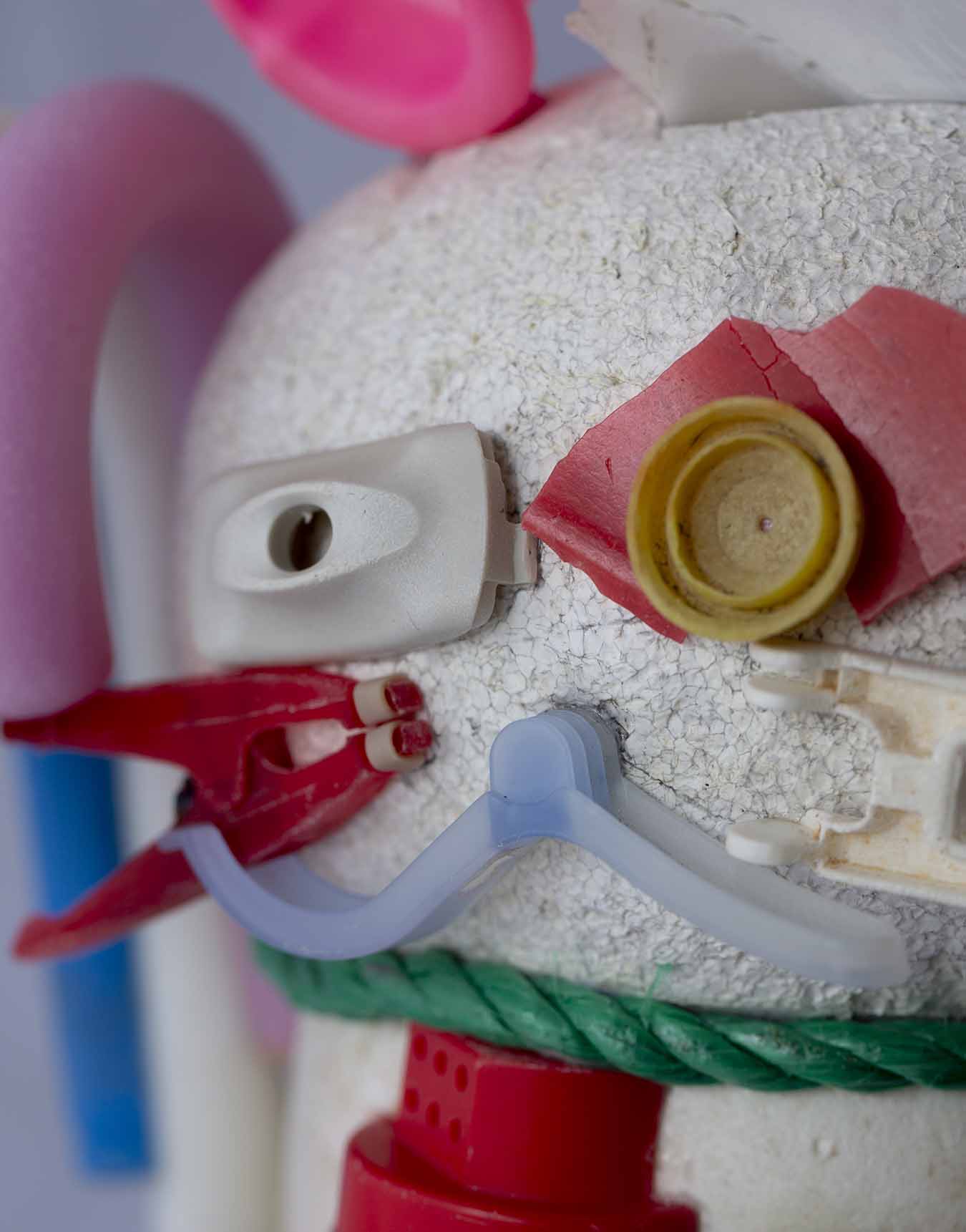
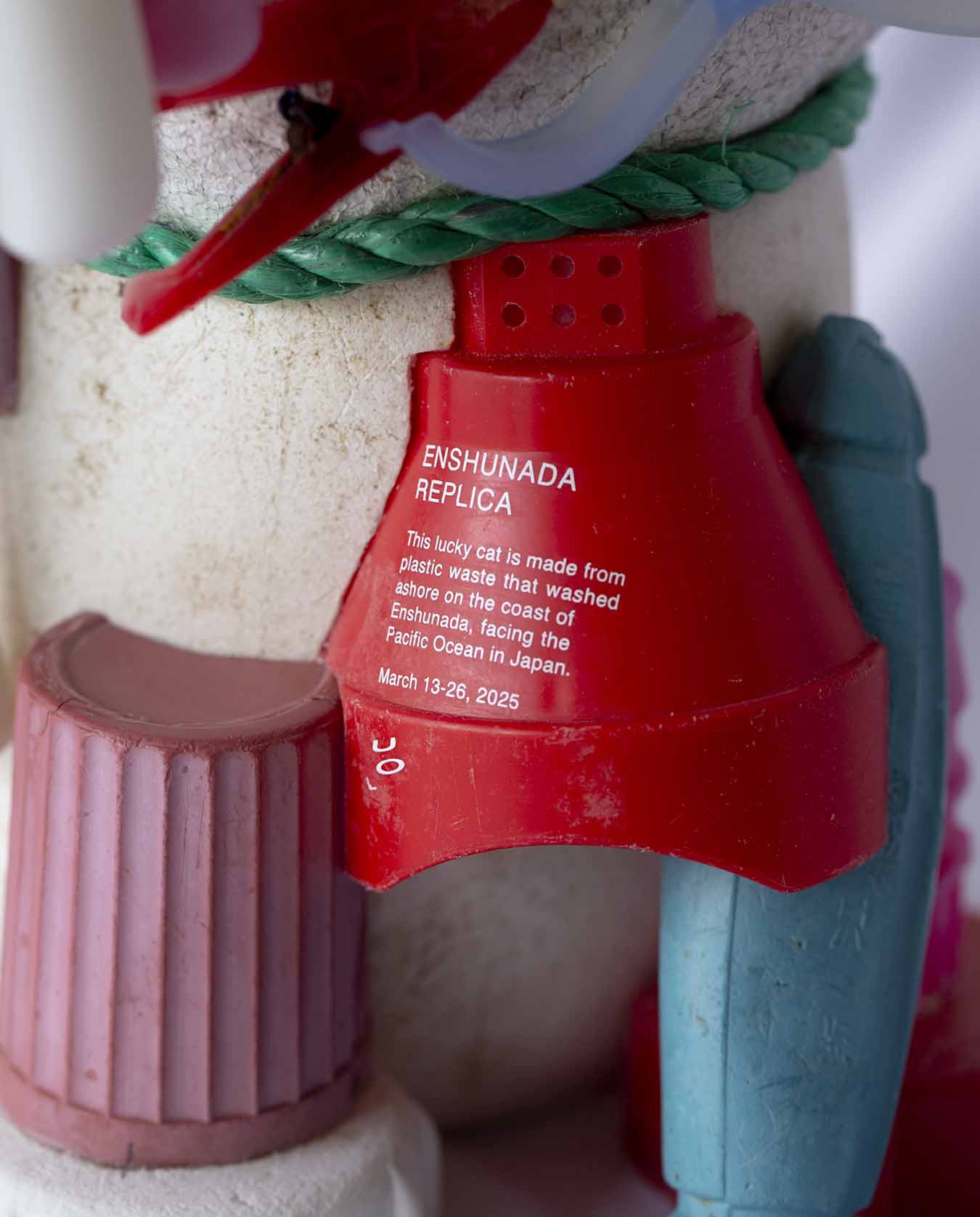
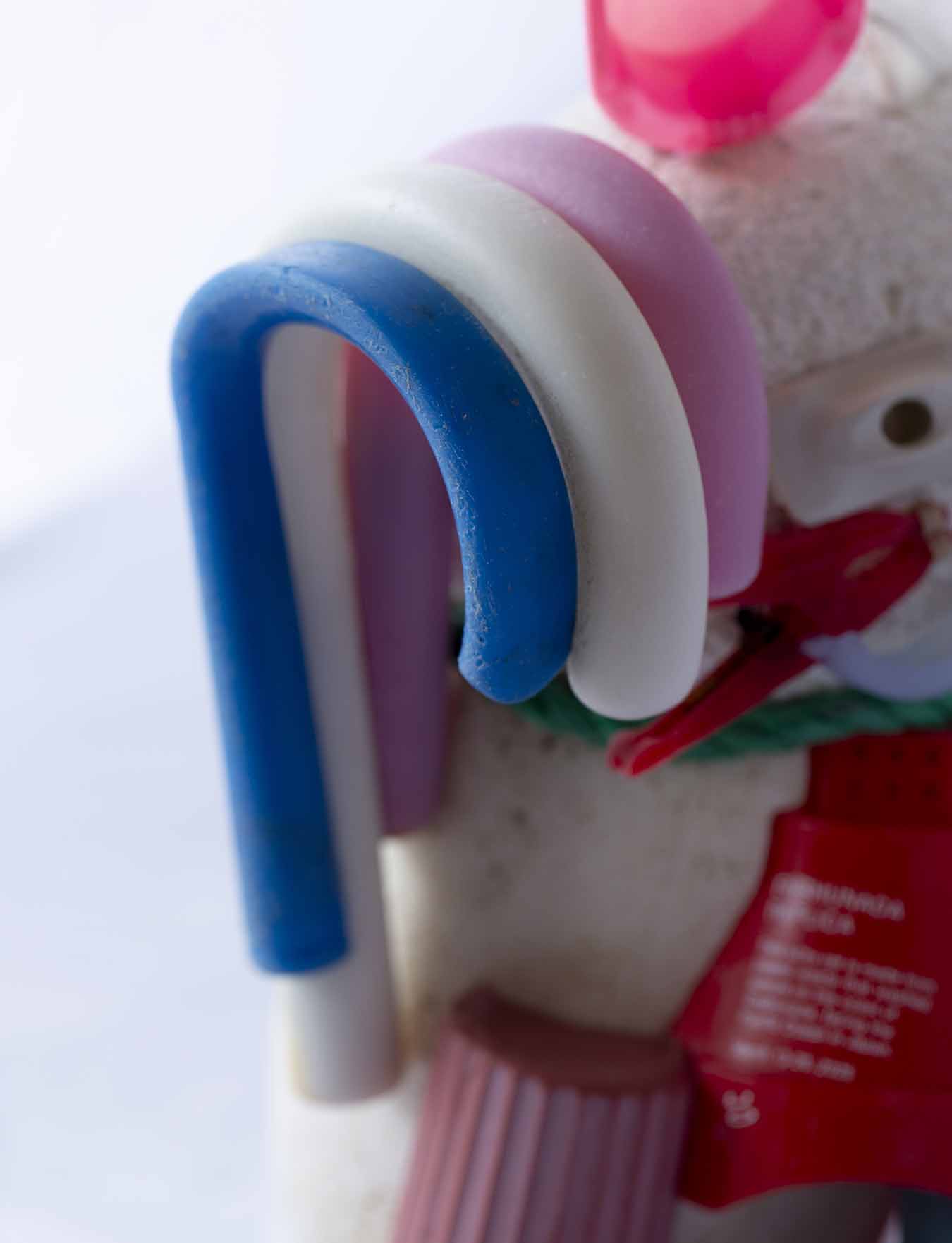
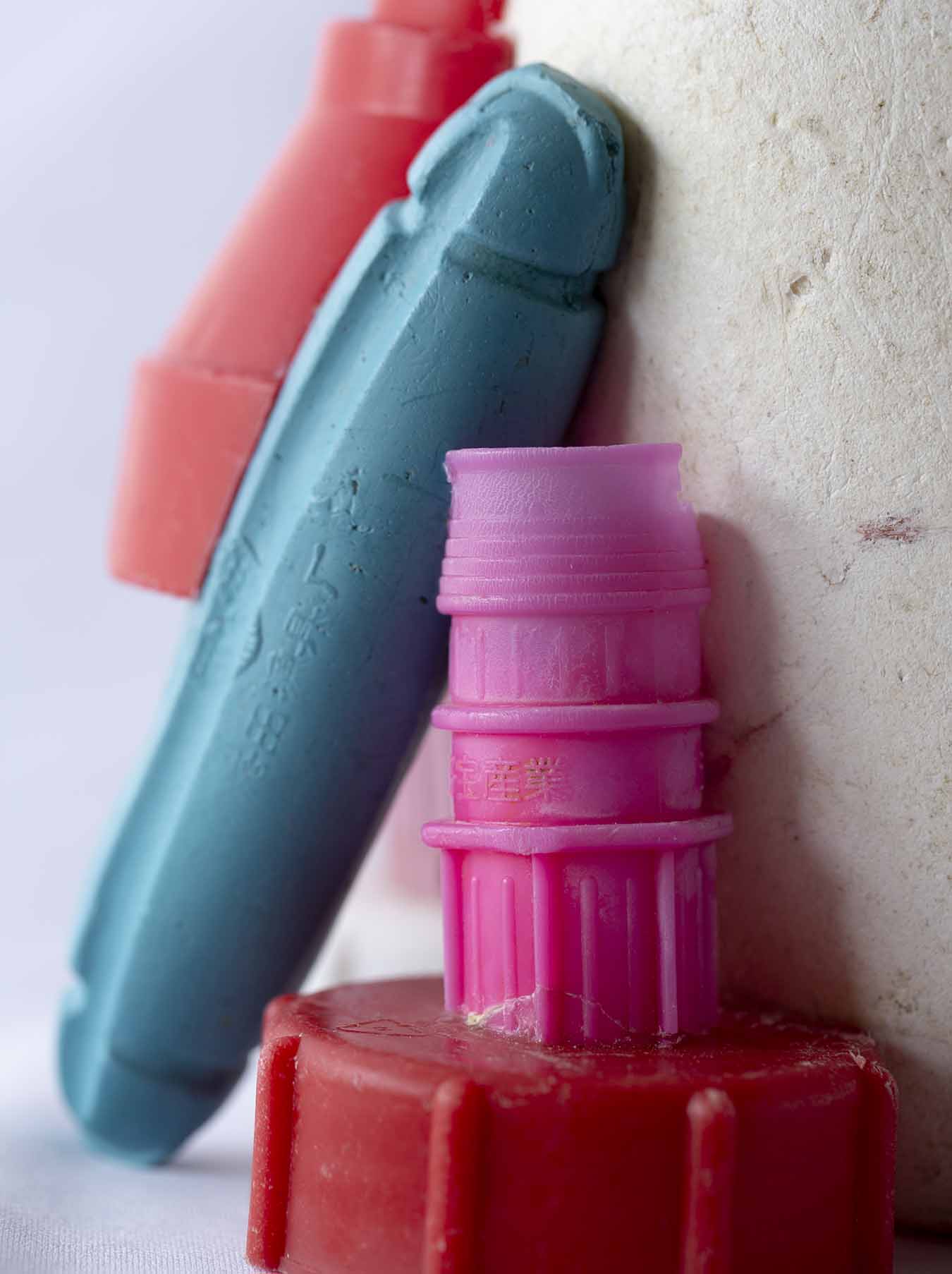
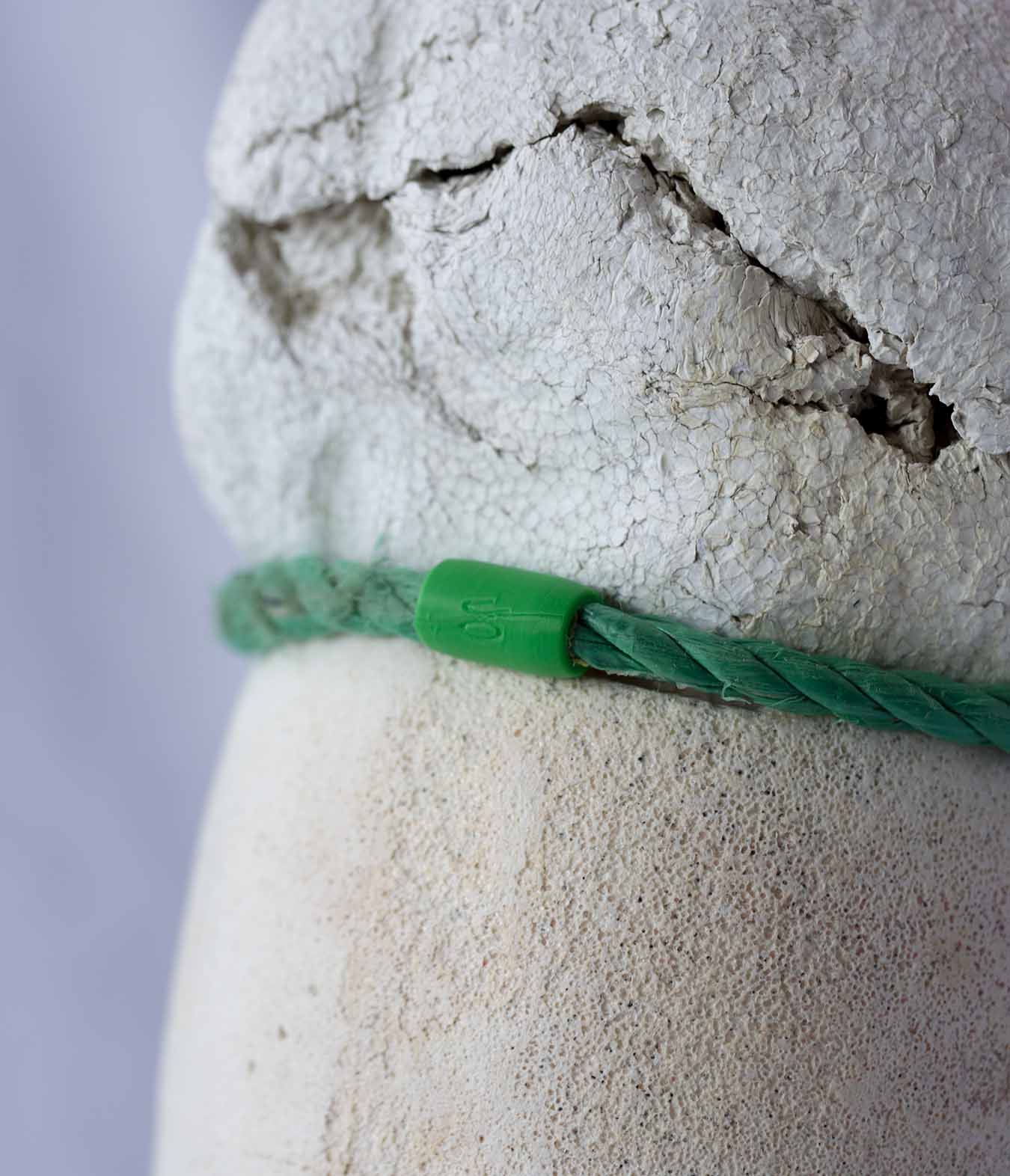
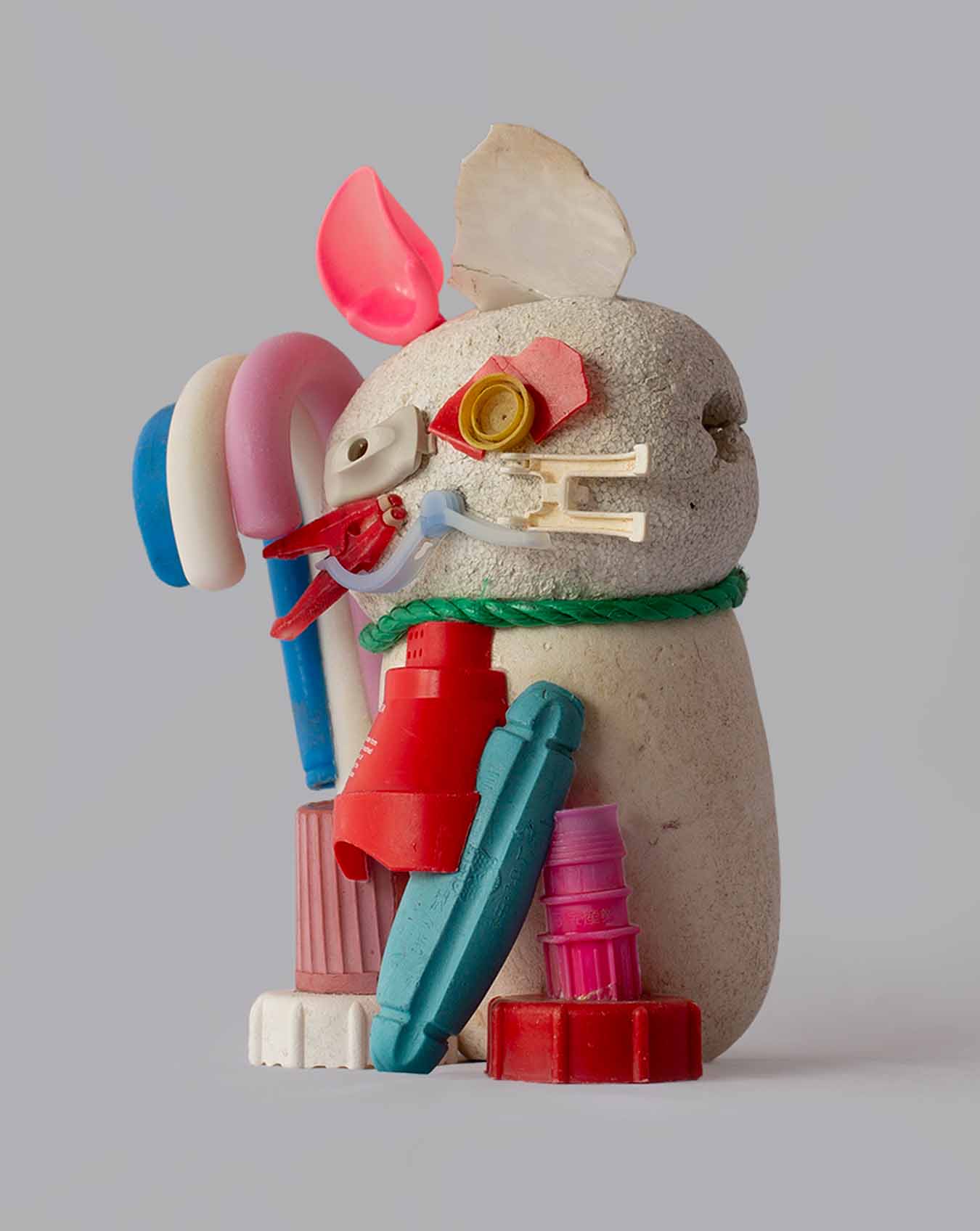
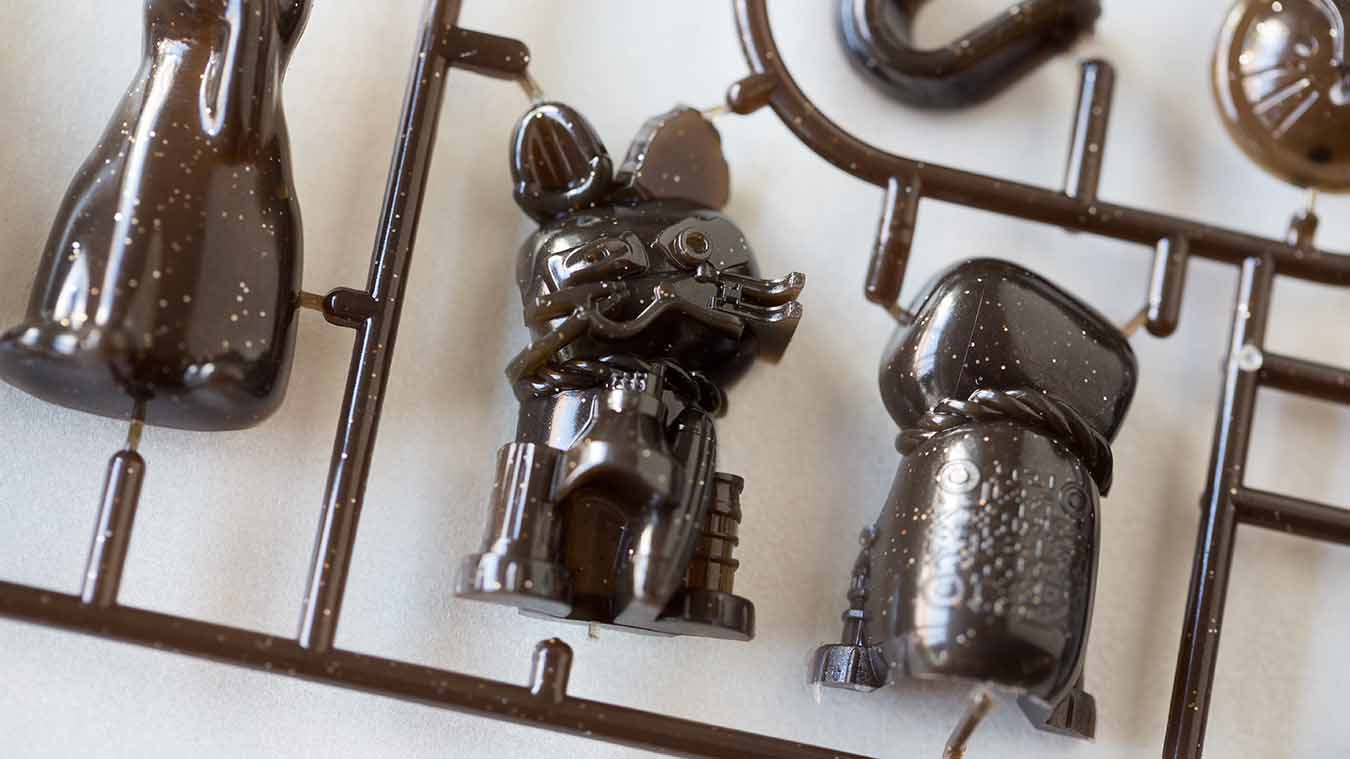
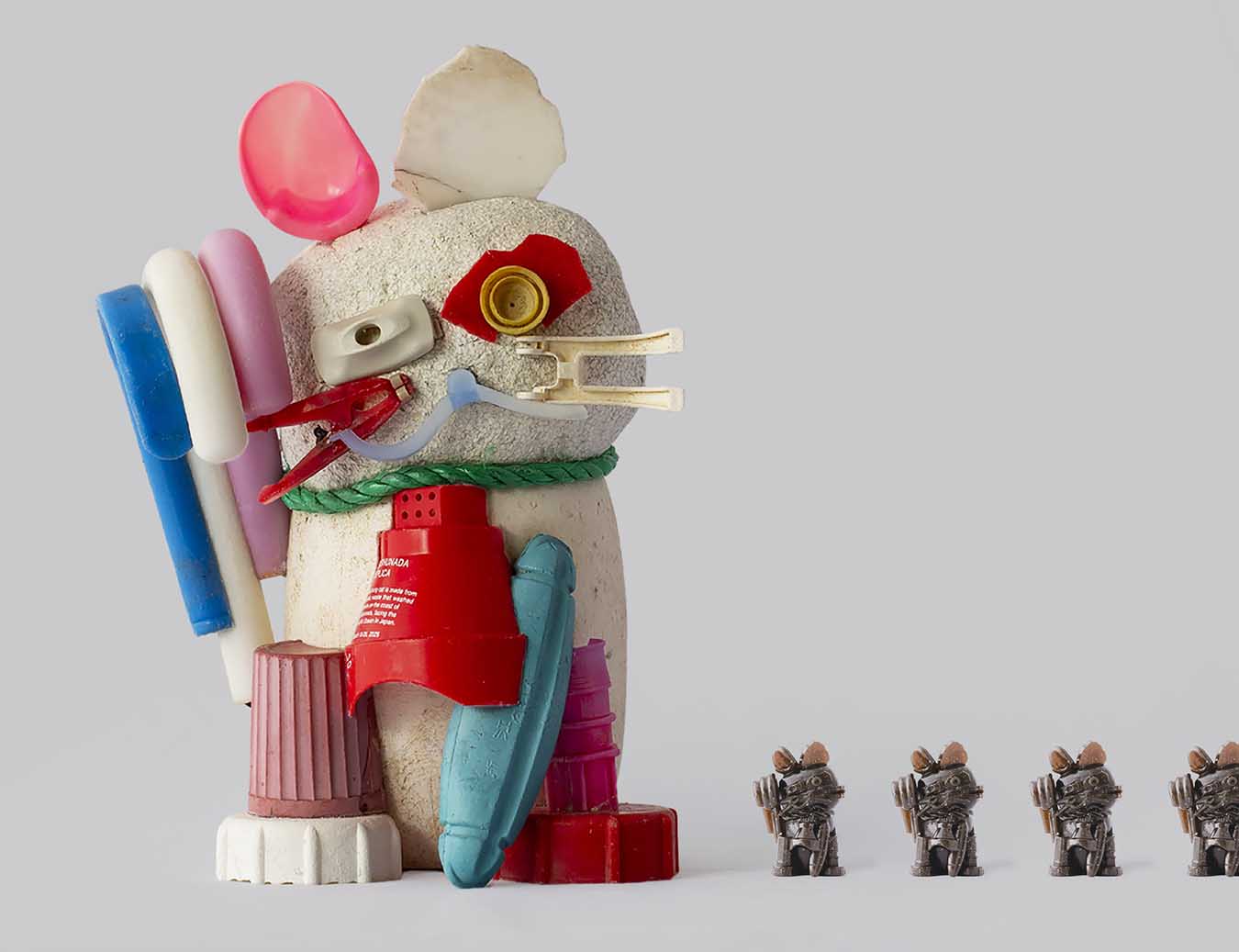
This time, we viewed the “maneki-neko” as a motif to gain a sense of ocean plastic. We walked along the nearby coast (Enshu-nada) within our living area, collected various plastics that had washed ashore, and used them as materials to create an “original” maneki-neko. The completed maneki-neko, approximately 300mm in height, is made entirely from plastic materials that we happened to collect. We then digitized it, created a mold, and replicated it using recycled plastic made from 100% reused polystyrene foam, which is marine debris. The replicas are distributed as capsule toys. The Maneki Neko distributed in this way can be said to be a “replica” of the drifted plastic debris that actually exists in this world and that we have experienced firsthand.
Using mass production methods such as capsule toys, we aim to spread awareness of marine plastic pollution to as many people as possible. This is also an attempt to raise social awareness of the lack of awareness surrounding stereotypical “sustainable materials.”
When we heard that the material used for this project was “marine plastic,” we realized that although we knew the term, we had no concrete understanding of what it actually looked like. What shape does it take? How heavy is it? What does it feel like? What does it smell like? How much of it exists, and where? We had no real sense of these things. We considered this to be one of the issues with sustainable materials. Recycled materials are collected, processed, and distributed far from the lives of individual consumers, and ultimately reach our hands, but the connection between this process and our lives feels fragmented and lacking in reality. What is needed is a sense of connection between marine plastic as a material and our daily lives, even if mediated by something else. And that sense of connection can only be found in the real ocean.
This time, we viewed the “maneki-neko” as a motif to gain a sense of ocean plastic. We walked along the nearby coast (Enshu-nada) within our living area, collected various plastics that had washed ashore, and used them as materials to create an “original” maneki-neko. The completed maneki-neko, approximately 300mm in height, is made entirely from plastic materials that we happened to collect. We then digitized it, created a mold, and replicated it using recycled plastic made from 100% reused polystyrene foam, which is marine debris. The replicas are distributed as capsule toys. The Maneki Neko distributed in this way can be said to be a “replica” of the drifted plastic debris that actually exists in this world and that we have experienced firsthand.
Using mass production methods such as capsule toys, we aim to spread awareness of marine plastic pollution to as many people as possible. This is also an attempt to raise social awareness of the lack of awareness surrounding stereotypical “sustainable materials.”
台湾と日本のデザイナー間の交流と海洋廃棄物の再利用に関するメッセージ発信を目的に、両国のデザイナー10組が、海洋廃棄物のプラスチックを原料にした招き猫のカプセルトイをデザインした。 このプロジェクトの使用素材が「海洋プラスチック」であると聞いたとき、私はその言葉も意味も知っているが、その実態は何も知らないことに気づいた。形、重さ、手触り、匂い、どのくらいの量なのか。海に浮いているのか、海岸に打ち上げられているのか?そうした実態を何も知らない。これはサステナブル素材にまつわる一般的な課題だと思った。再生マテリアルは生活者から遠く離れたところで採集され、加工され、流通し、最終的に私たちの手元に届く。しかし、このプロセスと私たちの関係は断片的でどこかリアリティが欠如している。私たちが受け取るのは完成された製品と、それがかつて海洋ゴミであったという「情報」だ。必要なのは、海洋プラスチックという素材と、自分自身の暮らしとが、目の前の製品を介し「確かに接続している」という実感である。そして、その実感は本物の海にしかない。
今回、私たちは「招き猫」を、「海洋プラスチックへの実感を得るためのモチーフ」と位置付けた。生活圏内にある身近な海岸(遠州灘)を歩き、そこに漂着した様々なプラスチックを拾い集め、それらを材料にして、招き猫の“オリジナル”を制作した。出来上がった全高約300mmの招き猫は、全ての部位が、私が海岸を歩き、拾い集めたプラスチック素材で構成されている。そしてそれをデジタルデータ化し、金型を制作。海洋ごみである発泡スチロールを100%再利用した再生プラスチックを用いて複製し、カプセルトイとして流通させた。これら流通する招き猫は、言わば、私たちが実際に手に取って実感した、現実の世界に存在する海洋プラスチックの“レプリカ”と言える。
カプセルトイという量産の手法を通じて、多くの人に私たちにとっての海洋プラスチックへの「実感」を拡散する。これは、ステレオタイプ化された“サステナブルマテリアル”への実感の欠如を社会に問いかけ、意識化させる試みでもある。
今回、私たちは「招き猫」を、「海洋プラスチックへの実感を得るためのモチーフ」と位置付けた。生活圏内にある身近な海岸(遠州灘)を歩き、そこに漂着した様々なプラスチックを拾い集め、それらを材料にして、招き猫の“オリジナル”を制作した。出来上がった全高約300mmの招き猫は、全ての部位が、私が海岸を歩き、拾い集めたプラスチック素材で構成されている。そしてそれをデジタルデータ化し、金型を制作。海洋ごみである発泡スチロールを100%再利用した再生プラスチックを用いて複製し、カプセルトイとして流通させた。これら流通する招き猫は、言わば、私たちが実際に手に取って実感した、現実の世界に存在する海洋プラスチックの“レプリカ”と言える。
カプセルトイという量産の手法を通じて、多くの人に私たちにとっての海洋プラスチックへの「実感」を拡散する。これは、ステレオタイプ化された“サステナブルマテリアル”への実感の欠如を社会に問いかけ、意識化させる試みでもある。
Expanding the possibilities of wallpaper in Japan, the wallpaper designs of the brand “WhO” provide wallpaper designs that are suitable for Japanese homes and spaces and appeal to Japanese sensibilities.
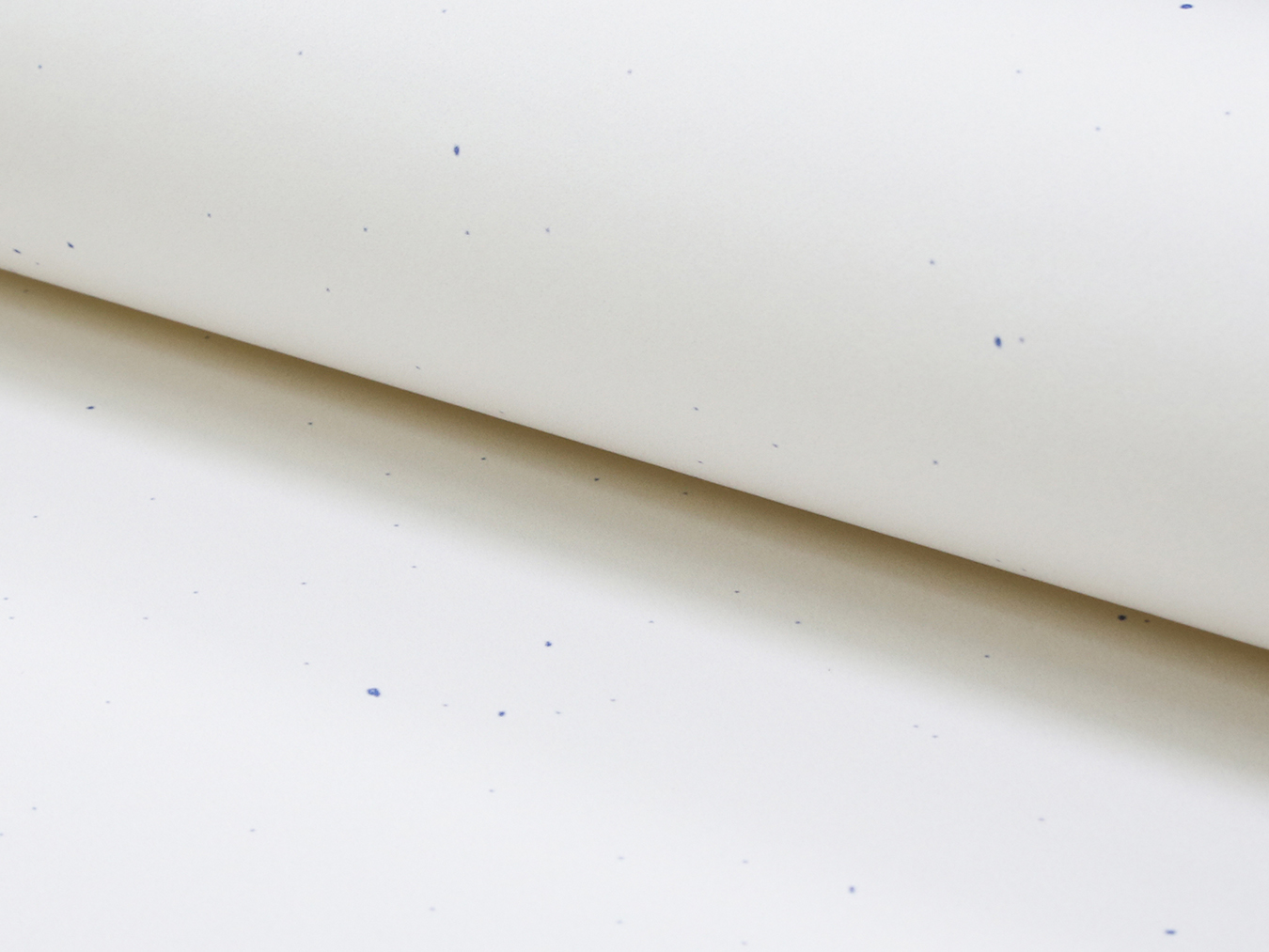
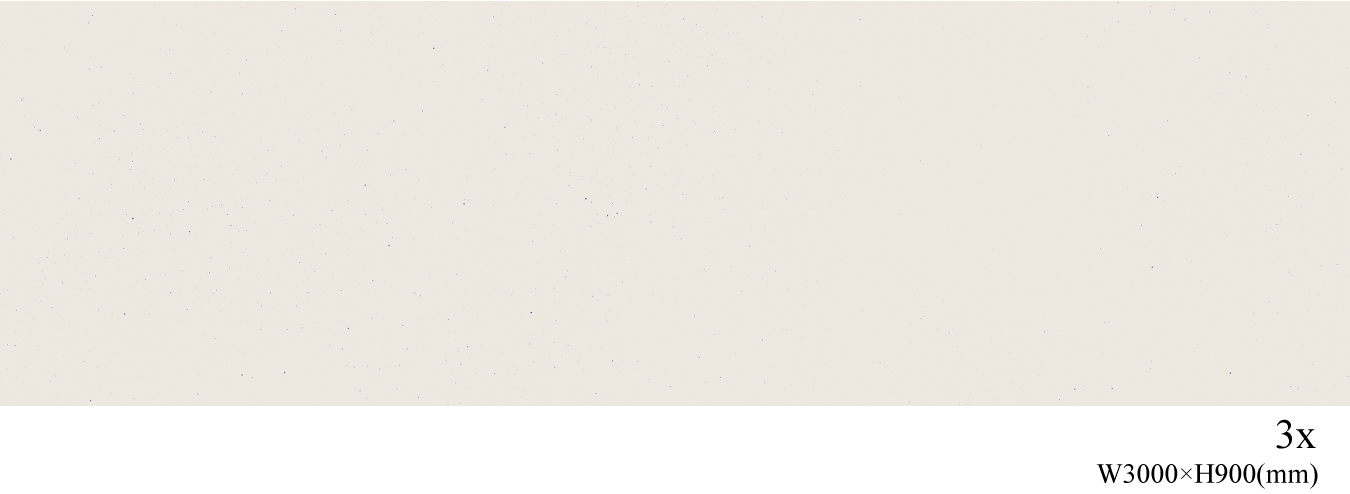
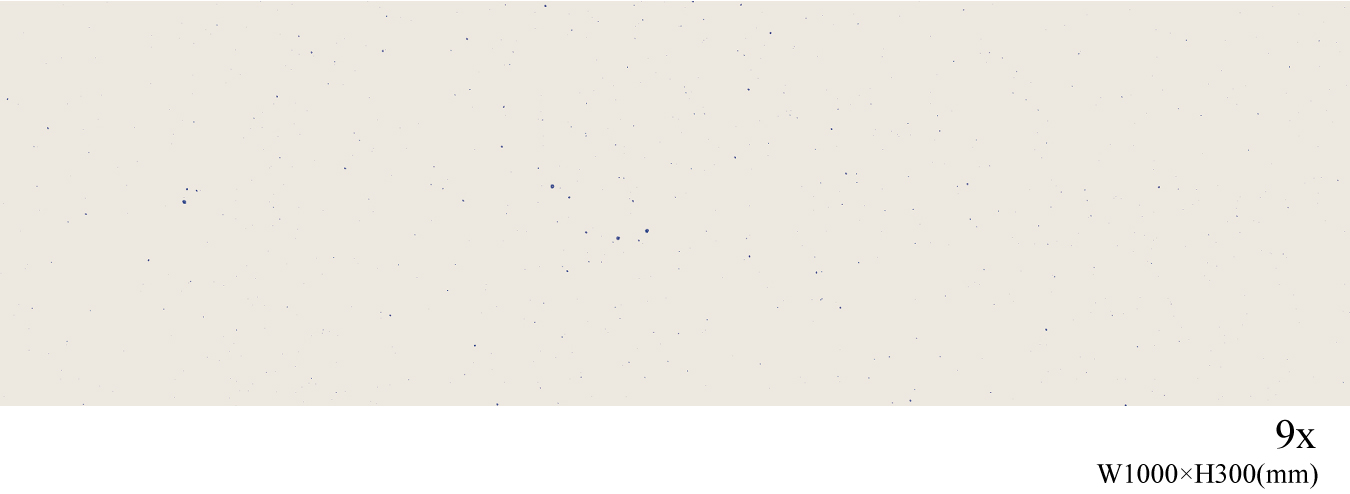
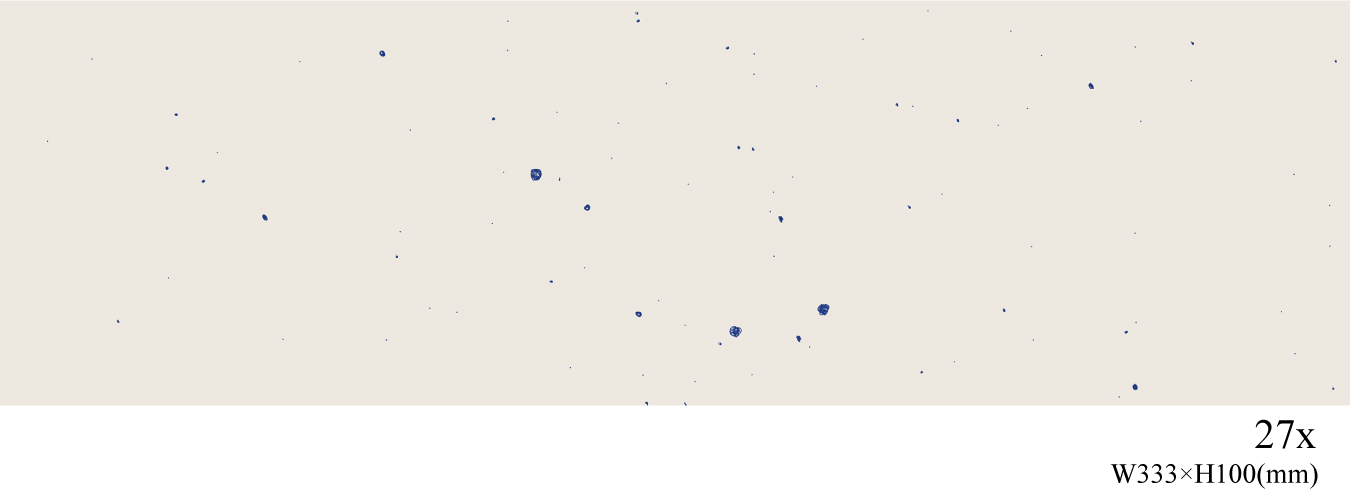
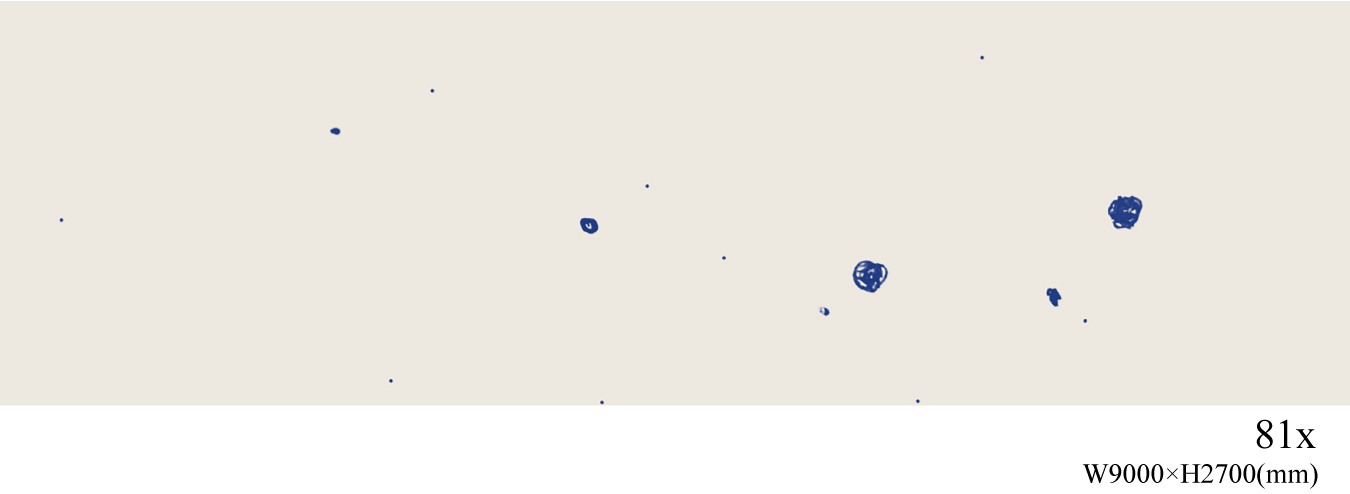
Using inkjet printing, countless dots were randomly arranged to create a huge pattern measuring 9m wide by 2.7m high. The dot sizes vary, ranging from several millimeters in diameter to as small as 0.2 millimeters. The number of dots perceived constantly changes depending on factors such as the distance from the wall, the time of day (morning or night), differences in vision, and the direction of one’s attention.
Just as there are countless stars in the darkness between stars that cannot be seen with the naked eye, there are always varying numbers of “visible dots” and “invisible dots” at any given moment.
This design was conceived based on the question of whether wallpaper printing can form a relationship with people as a “unique phenomenon” in its own right, rather than as a “substitute for something else” or “someone’s image.”
Inkjet printing is also composed of countless ink dots that cannot be perceived by the naked eye. Beyond the intended dots lie countless smaller, unintended dots.
Using inkjet printing, countless dots were randomly arranged to create a huge pattern measuring 9m wide by 2.7m high. The dot sizes vary, ranging from several millimeters in diameter to as small as 0.2 millimeters. The number of dots perceived constantly changes depending on factors such as the distance from the wall, the time of day (morning or night), differences in vision, and the direction of one’s attention.
Just as there are countless stars in the darkness between stars that cannot be seen with the naked eye, there are always varying numbers of “visible dots” and “invisible dots” at any given moment.
This design was conceived based on the question of whether wallpaper printing can form a relationship with people as a “unique phenomenon” in its own right, rather than as a “substitute for something else” or “someone’s image.”
Inkjet printing is also composed of countless ink dots that cannot be perceived by the naked eye. Beyond the intended dots lie countless smaller, unintended dots.
「日本における壁紙の可能性を広げながら、日本の住まいや空間に適した、日本人の感性にあうデザインの壁紙を提供する」ブランド「WhO」の壁紙のデザイン。
インクジェットプリントによる無数のドットをランダムに配置し、幅9m×高さ2.7mの巨大な図案を制作した。ドットのサイズは多様で、直径0.2~5㎜とすぐに発見できるものもあれば、近づき目を凝らさなくては見えないものもある。壁との距離、朝と夜、視力の差、意識の向け方などの複合的な条件により、捉えられるドットの数が絶えず変化する。
夜空の星と星との間の暗闇の中に、肉眼では捉えきれない無数の星が存在しているように、その時々で異なる「見えるドットと見えないドット」が存在する。人の認識における粗密は、物理的な粗密とイコールではない。
壁紙のプリントが“何かの代替”でなく、“誰かのイメージ”でもなく、それ自体が“固有の現象”として人との新たな関係を結べるか?という問いをもとに考案した。
インクジェットプリント自体もまた、肉眼では捉えられない無数のドット状のインクの集合体である。意図されたドットの向こうには、更に小さな意図しない無数のドットが存在し、「プリント」という前提も、この壁紙のつくる現象の構成要素と捉えている。
インクジェットプリントによる無数のドットをランダムに配置し、幅9m×高さ2.7mの巨大な図案を制作した。ドットのサイズは多様で、直径0.2~5㎜とすぐに発見できるものもあれば、近づき目を凝らさなくては見えないものもある。壁との距離、朝と夜、視力の差、意識の向け方などの複合的な条件により、捉えられるドットの数が絶えず変化する。
夜空の星と星との間の暗闇の中に、肉眼では捉えきれない無数の星が存在しているように、その時々で異なる「見えるドットと見えないドット」が存在する。人の認識における粗密は、物理的な粗密とイコールではない。
壁紙のプリントが“何かの代替”でなく、“誰かのイメージ”でもなく、それ自体が“固有の現象”として人との新たな関係を結べるか?という問いをもとに考案した。
インクジェットプリント自体もまた、肉眼では捉えられない無数のドット状のインクの集合体である。意図されたドットの向こうには、更に小さな意図しない無数のドットが存在し、「プリント」という前提も、この壁紙のつくる現象の構成要素と捉えている。


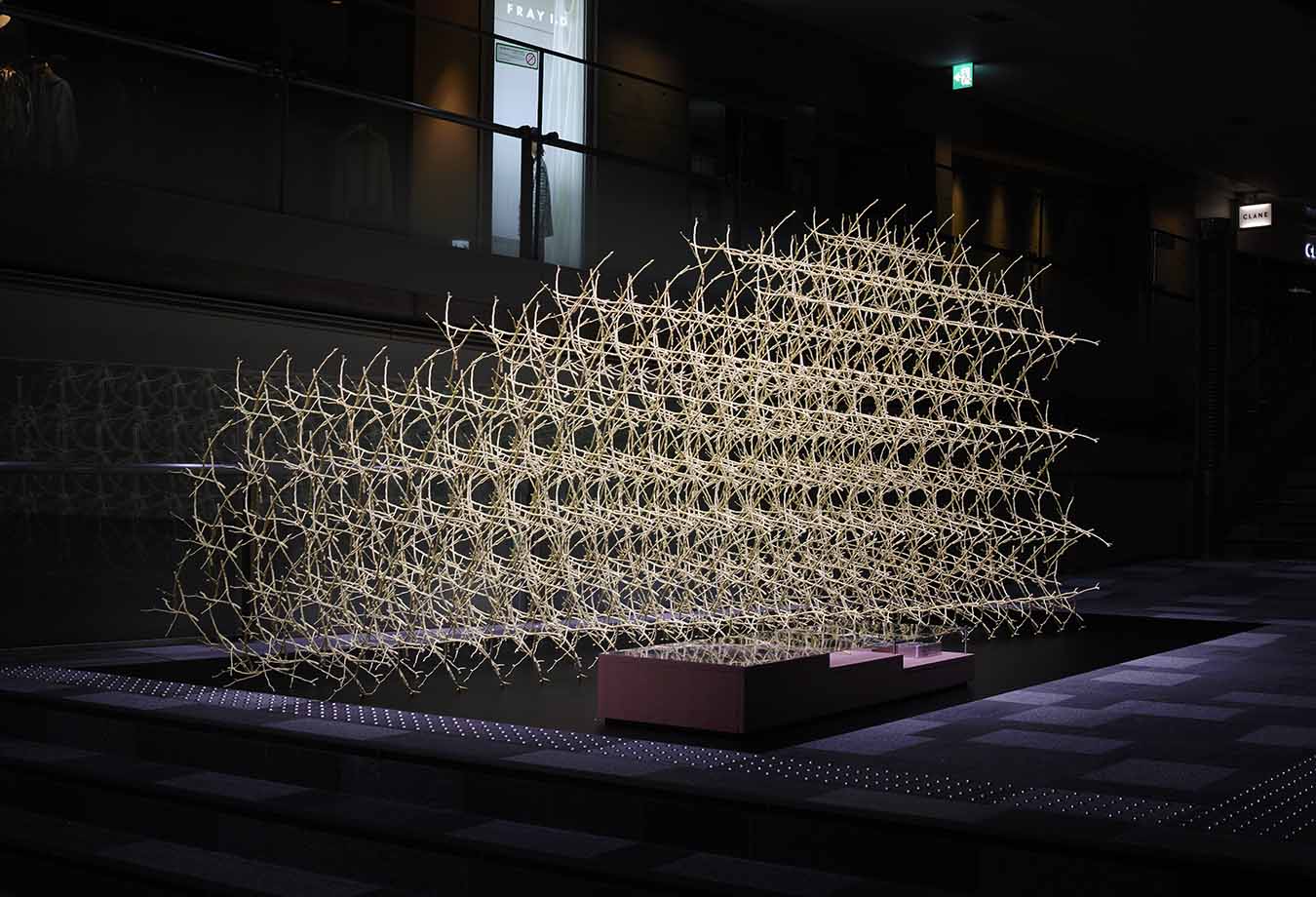
This object is made of a zelkova branch that was picked up at about 10:48 AM on August 10, 2022, at a distance of 60 meters southeast of this location, near the main entrance of Omotesando Hills. I copied the shape of the branch as it looked when I picked it up, replaced the material with plastic, and copied it into 2,000 pieces. Furthermore, like a toy block, the pieces of the same branch are processed so that they can be connected infinitely.
An original zelkova branch is a natural object that just happened to be there, and no other form of the same tree exists, and if someone had stepped on it before or after the timing of its discovery, it might have changed to a different form. In a sense, this branch is the product of chance, formed from the only intersection of infinite space and time. By duplicating it 2,000 times, arranging it regularly, and creating a large sculpture, I wondered if I could create an effect like a magnifying glass that would clarify the uniqueness of its existence.
Every intersection of space and time contains different conditions for “being”. Imagining them is also the minimal action of drawing the object out of the myriad of neutral, boundary-blurring existences and into human society. Not only the things which can be touched but also what is somewhere far away. What once existed and the possibility of what could exist in the future. We invite into our consciousness the possibility of the existence of all things and try to comprehend them as equivalent. What do the world and Omotesando look like from there?
An original zelkova branch is a natural object that just happened to be there, and no other form of the same tree exists, and if someone had stepped on it before or after the timing of its discovery, it might have changed to a different form. In a sense, this branch is the product of chance, formed from the only intersection of infinite space and time. By duplicating it 2,000 times, arranging it regularly, and creating a large sculpture, I wondered if I could create an effect like a magnifying glass that would clarify the uniqueness of its existence.
Every intersection of space and time contains different conditions for “being”. Imagining them is also the minimal action of drawing the object out of the myriad of neutral, boundary-blurring existences and into human society. Not only the things which can be touched but also what is somewhere far away. What once existed and the possibility of what could exist in the future. We invite into our consciousness the possibility of the existence of all things and try to comprehend them as equivalent. What do the world and Omotesando look like from there?
このオブジェクトは2022年の8月10日 AM10:48頃、設置場所である表参道ヒルズの吹抜け大階段から南東に60mほどの距離にある、表参道の歩道の植込みで拾ったケヤキの枝からできている。この枝を、採集時の姿のまま形を3Dデータとして記録し、素材をプラスチックに置き換え、2000本にコピーした。さらに凹凸を付けブロック玩具のように、同じ枝を無限につなげることができるようにした。
もとになったケヤキの枝は、偶然拾い上げた自然物で、同じものは他に存在しないし、見つけるタイミングが前後していたら、誰かに踏まれ別の形に変わっていたかもしれない。この枝は言わば無限の空間と時間との唯一の交わりの産物である。これを2000倍に複製し、規則的に整列し、大きな造形物をつくることで、その存在の唯一性を鮮明化する拡大鏡のような効果を持たせられないかと考えた。
あらゆる空間と時間の交点に異なる“存在すること”の成立条件は含まれている。それらを想像することは、中立的で境界のあいまいな無数の存在からその対象を人間社会に引き抜くことの最小作用でもある。触れられるものだけでなく、遠くのどこかにあるもの。かつて存在していたものや、これから存在し得る可能性。あらゆるものの存在の可能性を意識の中に招き入れ、それらを等価なものとして捉え直してみる。そこから見える表参道、あるいは世界はどのような姿をしているか。
もとになったケヤキの枝は、偶然拾い上げた自然物で、同じものは他に存在しないし、見つけるタイミングが前後していたら、誰かに踏まれ別の形に変わっていたかもしれない。この枝は言わば無限の空間と時間との唯一の交わりの産物である。これを2000倍に複製し、規則的に整列し、大きな造形物をつくることで、その存在の唯一性を鮮明化する拡大鏡のような効果を持たせられないかと考えた。
あらゆる空間と時間の交点に異なる“存在すること”の成立条件は含まれている。それらを想像することは、中立的で境界のあいまいな無数の存在からその対象を人間社会に引き抜くことの最小作用でもある。触れられるものだけでなく、遠くのどこかにあるもの。かつて存在していたものや、これから存在し得る可能性。あらゆるものの存在の可能性を意識の中に招き入れ、それらを等価なものとして捉え直してみる。そこから見える表参道、あるいは世界はどのような姿をしているか。




UO created two sculptures for the “Kakegawa Tea Ennale 2020+1” in Kakegawa City, Shizuoka Prefecture, one of Japan’s leading tea-producing regions. In “Teapot Group B as Surroundings for Tea,” a lid with a spout of a kyusu is placed over a variety of ready-made objects that hold liquid. The viewer can imagine the overlapping meanings of the various ready-made objects, which look like kyusu (teapots), by looking at their hybrid appearance. The various meanings discovered by the viewer’s individual interpretation could be the seed for a new way of Japanese tea ceremony in this city.
What we have designed is the rule of “kyusu lid” itself, and we have not defined the meaning of the individual objects that result from this rule. We designed the rule not on the value or meaning of the object itself, but on how we can define the rule to maximize its effect when its purpose is “to be a catalyst for an idea for someone unknown”.
What we have designed is the rule of “kyusu lid” itself, and we have not defined the meaning of the individual objects that result from this rule. We designed the rule not on the value or meaning of the object itself, but on how we can define the rule to maximize its effect when its purpose is “to be a catalyst for an idea for someone unknown”.
日本有数の日本茶の産地、静岡県掛川市で行われる「掛川茶エンナーレ2020+1」の展示作品。UOは、お茶に関する新しい可能性を誘発する装置としての急須に着目し2種の造形作品を制作した。
「茶の周囲としての急須群B」は、身の回りにある、液体を留める形の多様な既製品に対し、急須の注ぎ口が生えた蓋を被せている。急須のようにも見える多様な既製品は、本来の用途と、急須としての用途とが、強引に結び付けられ、鑑賞者はそのハイブリッドな姿から互いの意味の重なりを想像する。鑑賞者の個々の解釈によって見出される多様な意味は、この街に日本茶の新たな作法を生むための種となり得る。
私たちがデザインしたのは、「急須型の蓋をする」というルールであり、個々の造形物に対しては、その意味を定義していない。もの自体の価値や意味ではななく、「見知らぬ誰かにとってのアイデアの触媒となること」を目的とした場合に、その効果をいかにして最大化するルールを定義できるかということを主題にデザインした。
「茶の周囲としての急須群B」は、身の回りにある、液体を留める形の多様な既製品に対し、急須の注ぎ口が生えた蓋を被せている。急須のようにも見える多様な既製品は、本来の用途と、急須としての用途とが、強引に結び付けられ、鑑賞者はそのハイブリッドな姿から互いの意味の重なりを想像する。鑑賞者の個々の解釈によって見出される多様な意味は、この街に日本茶の新たな作法を生むための種となり得る。
私たちがデザインしたのは、「急須型の蓋をする」というルールであり、個々の造形物に対しては、その意味を定義していない。もの自体の価値や意味ではななく、「見知らぬ誰かにとってのアイデアの触媒となること」を目的とした場合に、その効果をいかにして最大化するルールを定義できるかということを主題にデザインした。